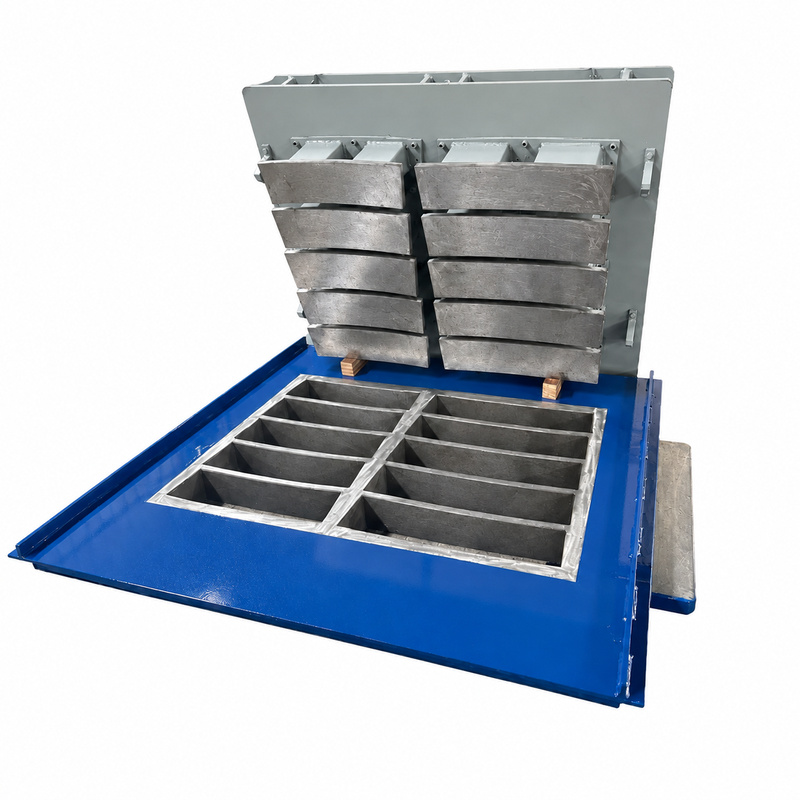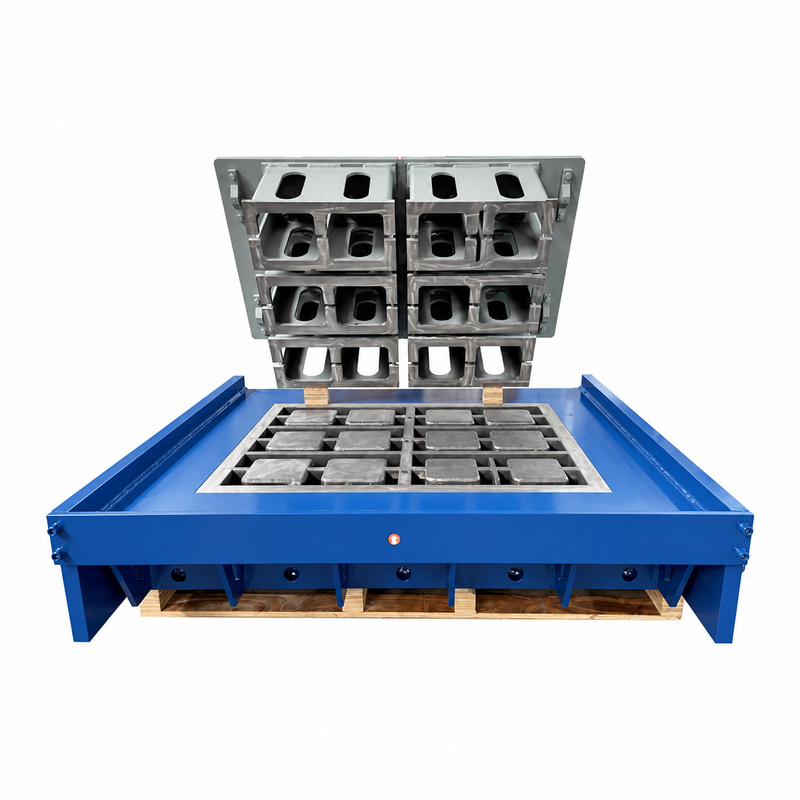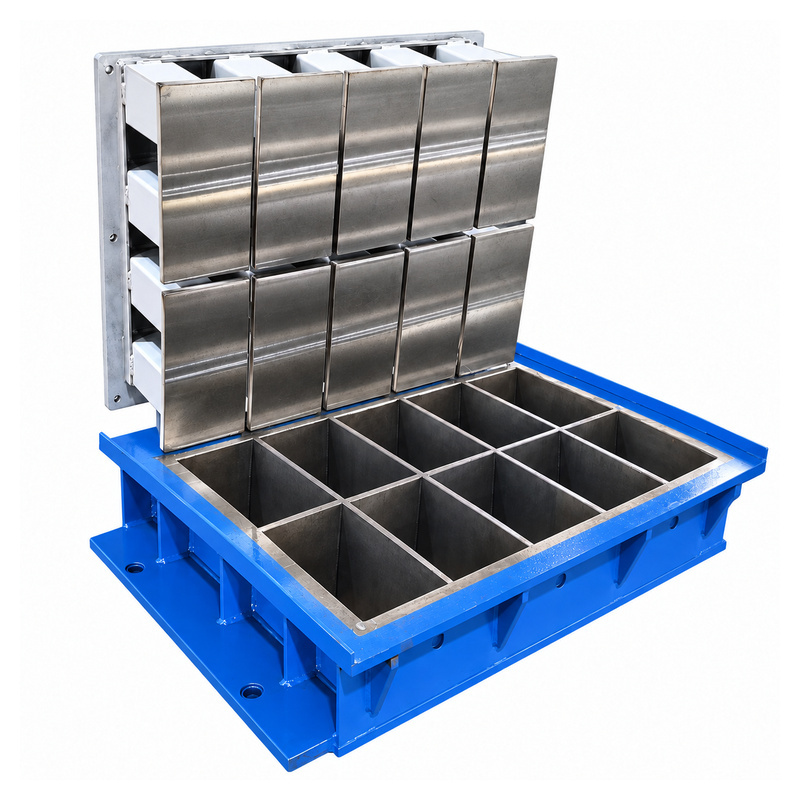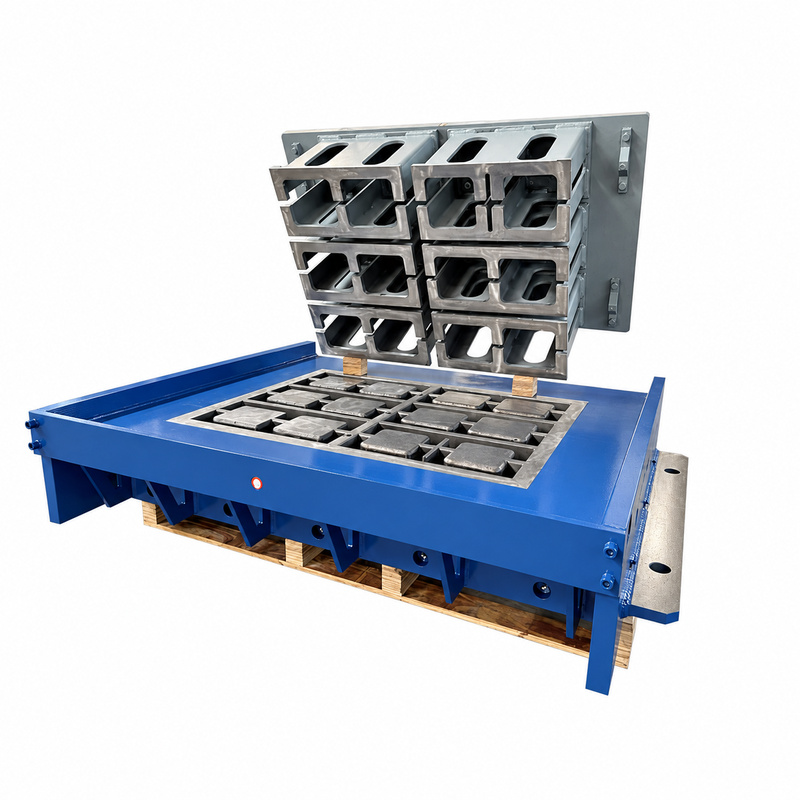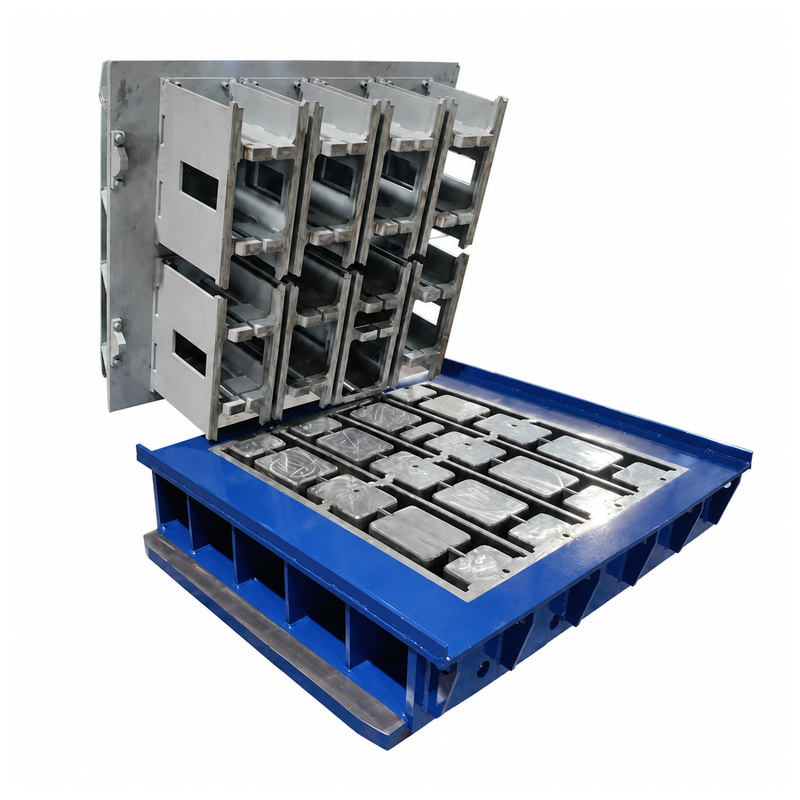
Concrete Block Molds
Hollow Block Mold
Solid Block Mold
Solid Brick Mold
Interlocking Block Mold
Thermal Block Mold
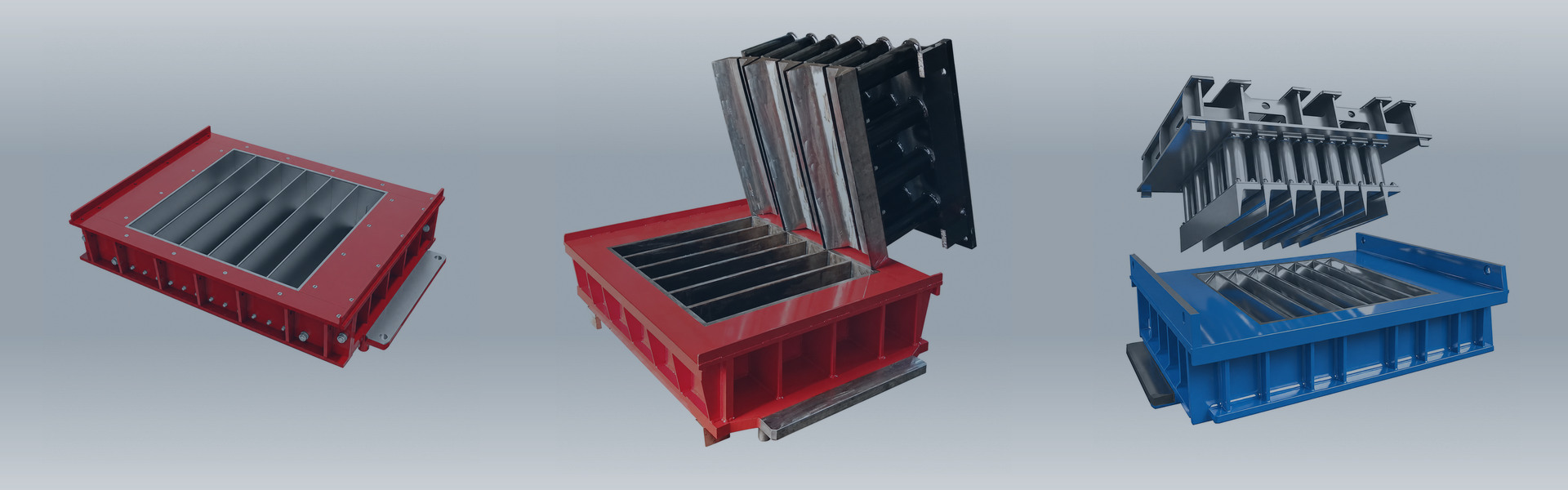
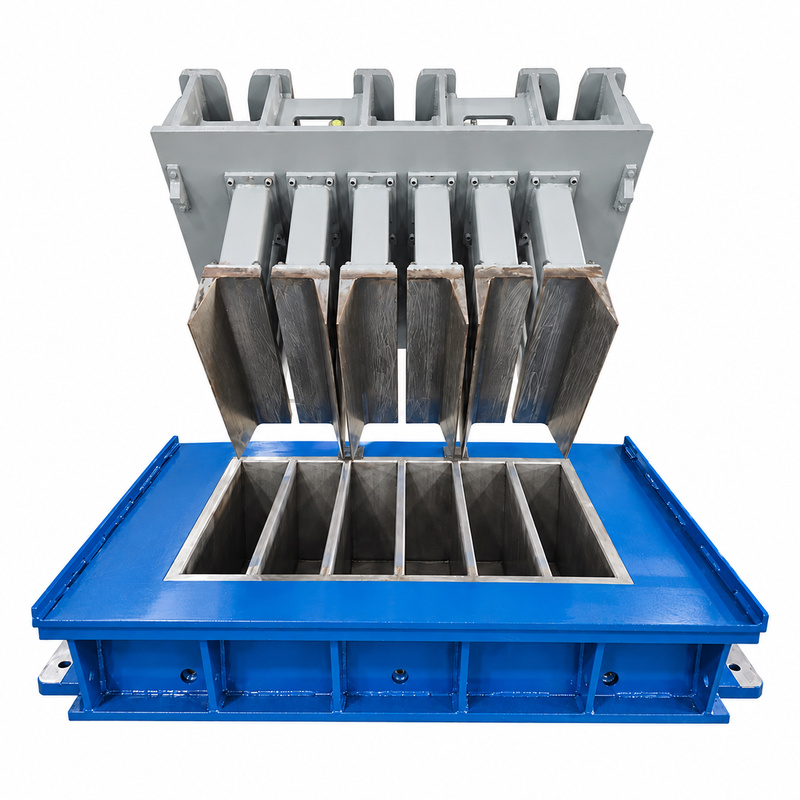
Explore curbstone and kerbstone mould features for custom cross-sections, slopes, radii, cavity layouts, reinforced structures and demolding review....
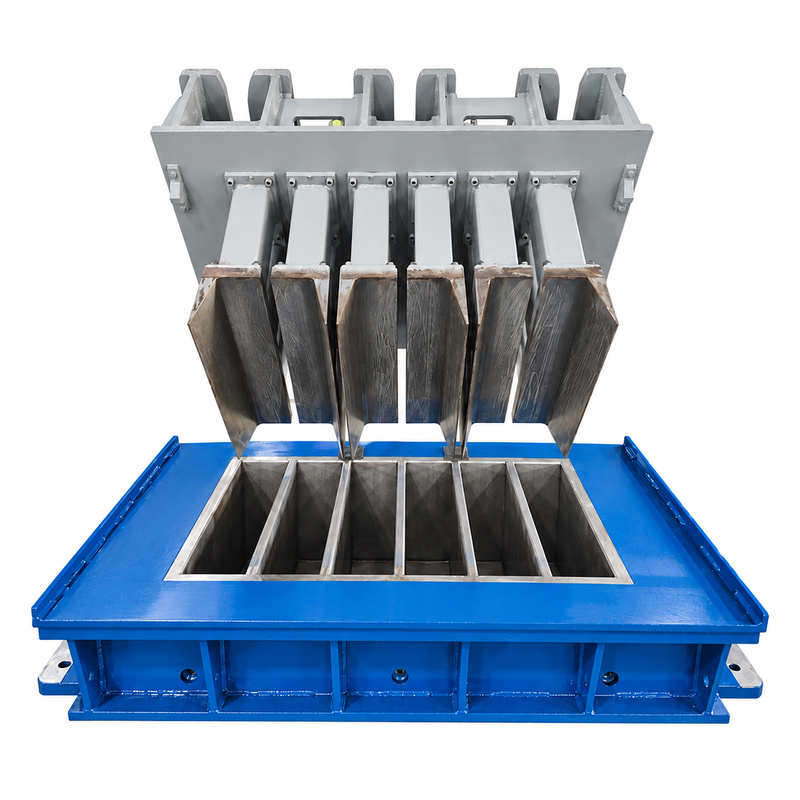
Curbstone molds can follow different lengths, widths, heights and cross-sections, with detailed drawings defining the intended curb geometry....
Curbstone mold designs can include faces, slopes, rounded sections and suitable edge details, supporting consistent profiles across finished units....
Curbstone mold product dimensions and cavity arrangements are checked against machine area and production needs to establish a suitable configuration....
Curbstone molds use welded stiffeners and suitable wear-component materials and heat treatment to support stability and retention of forming dimensions....
Curbstone mold profiles and demolding requirements are reviewed before manufacture, addressing release factors alongside mix and machine settings....
This category covers the mould features that shape curbstone and kerbstone production, from edge profile and dimensional control to the wear points that affect long-run consistency. It is written for concrete block producers, paver and kerbstone manufacturers, and teams specifying retaining-wall or special-shape moulds who need to compare how a mould is built before committing to a tooling order.
The topics collected here explain the requirements behind each feature: the brick or kerbstone type being formed, the interface conditions the mould must match, and the parameters that must be confirmed before a design can be finalized. Where a value is not yet established, it stays marked as unconfirmed rather than assumed.
HAWEN helps by setting out the information needed to check an interface and by documenting mould features against real, supplied parameters. Use these pages to identify which details your project must provide, then confirm them with our team before production planning begins.

 Tel: +8618359454595
 Email: sale@hwmachines.com
 MP/WhatsApp: +8618359454595
 Manufacturer Address:Nanan, Quanzhou City, Fujian Province, China