
 Mould Model
 Product Size
 Material / HRC
 Cavities/Cycle
 Machine Brand
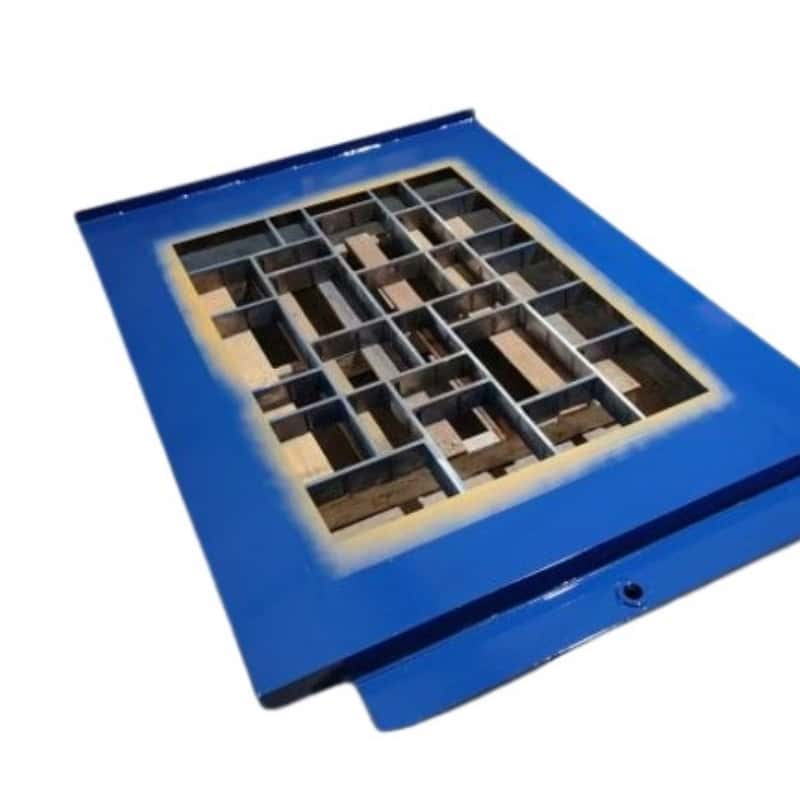
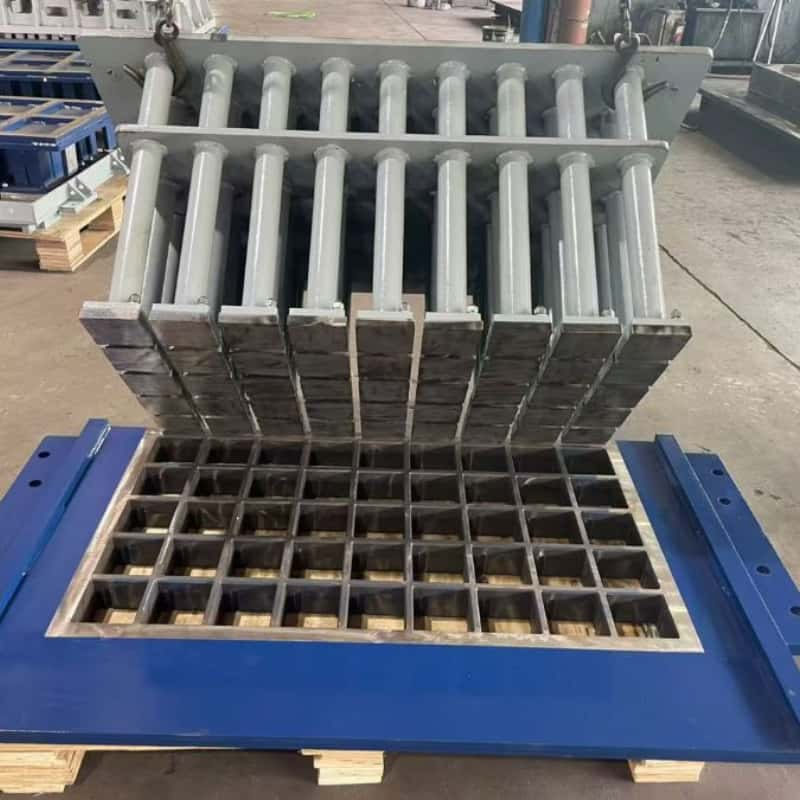
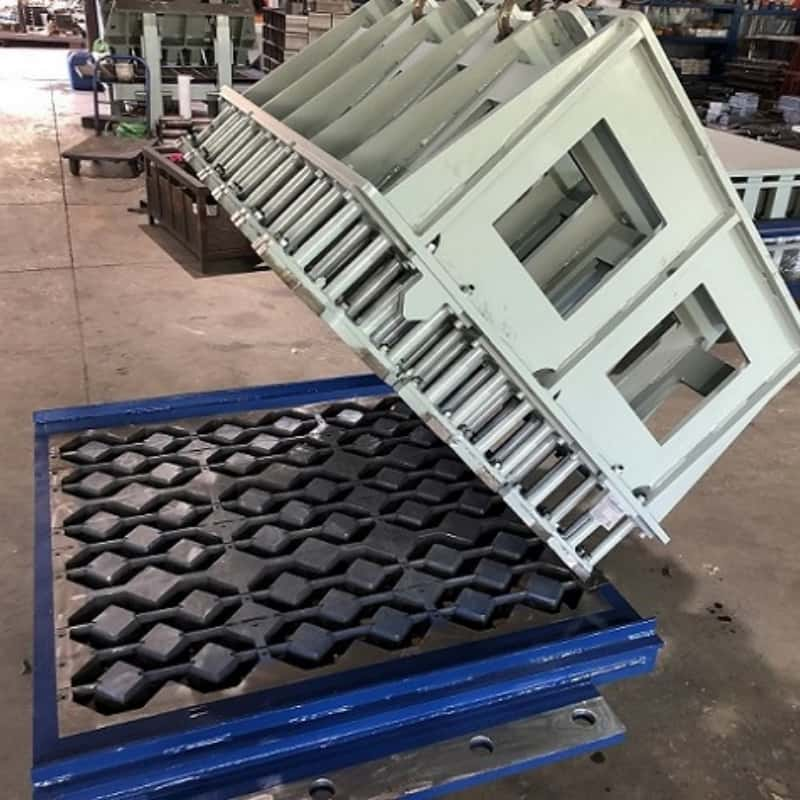
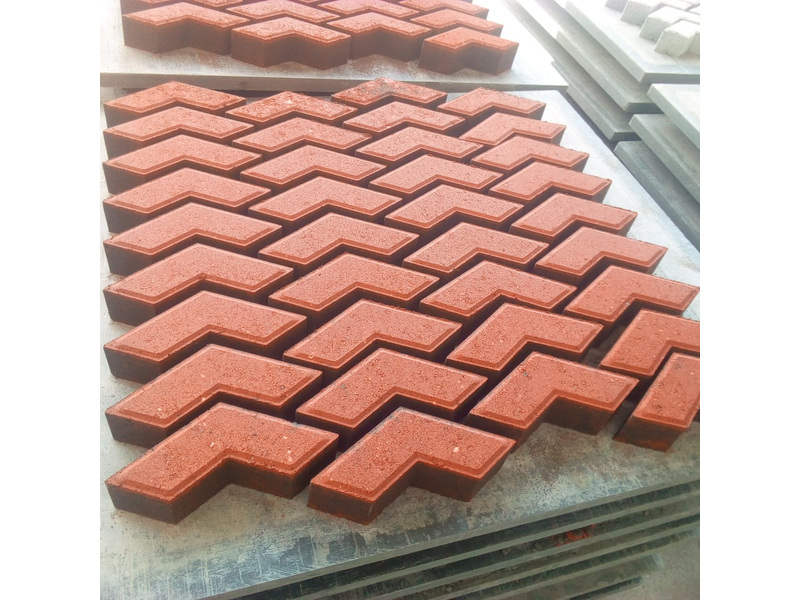
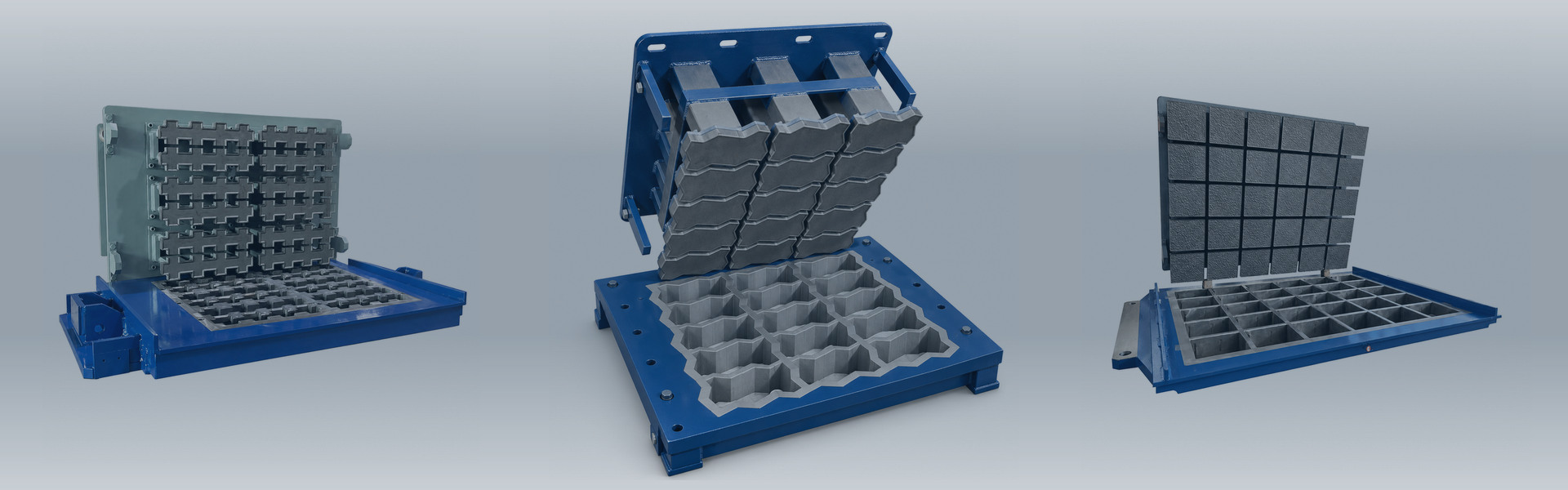
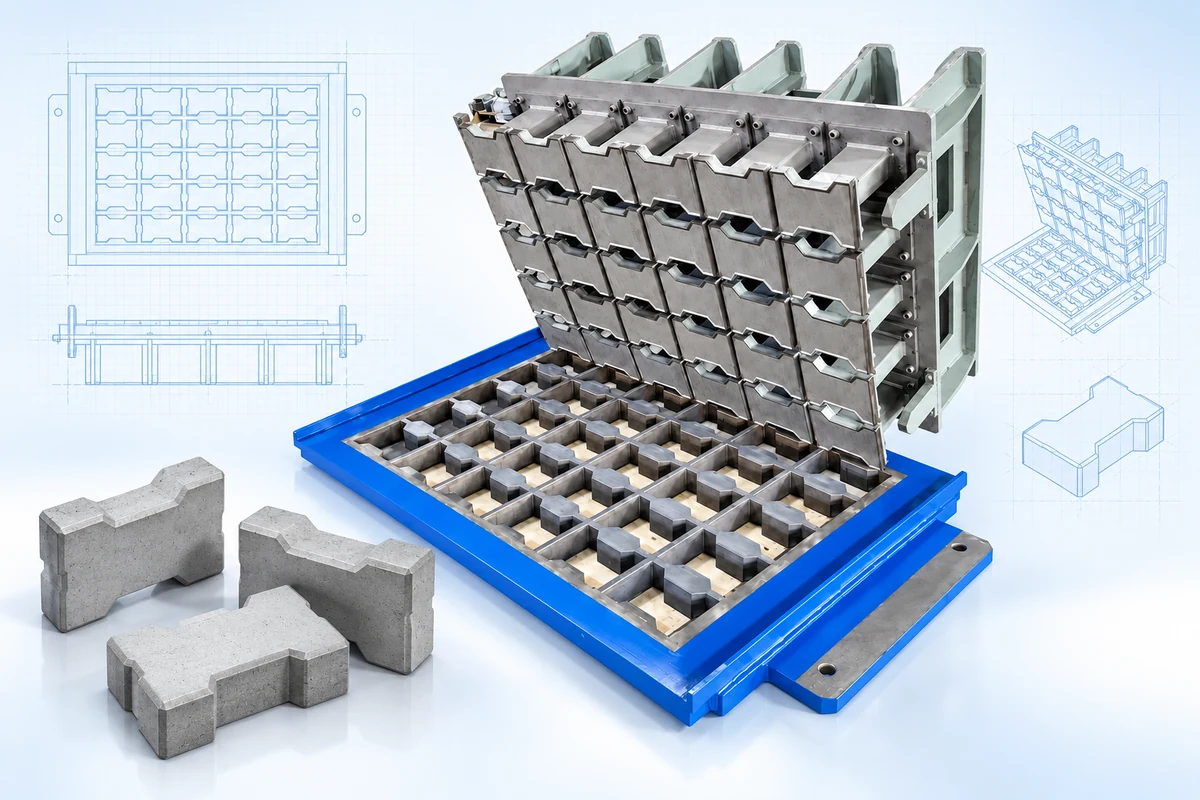
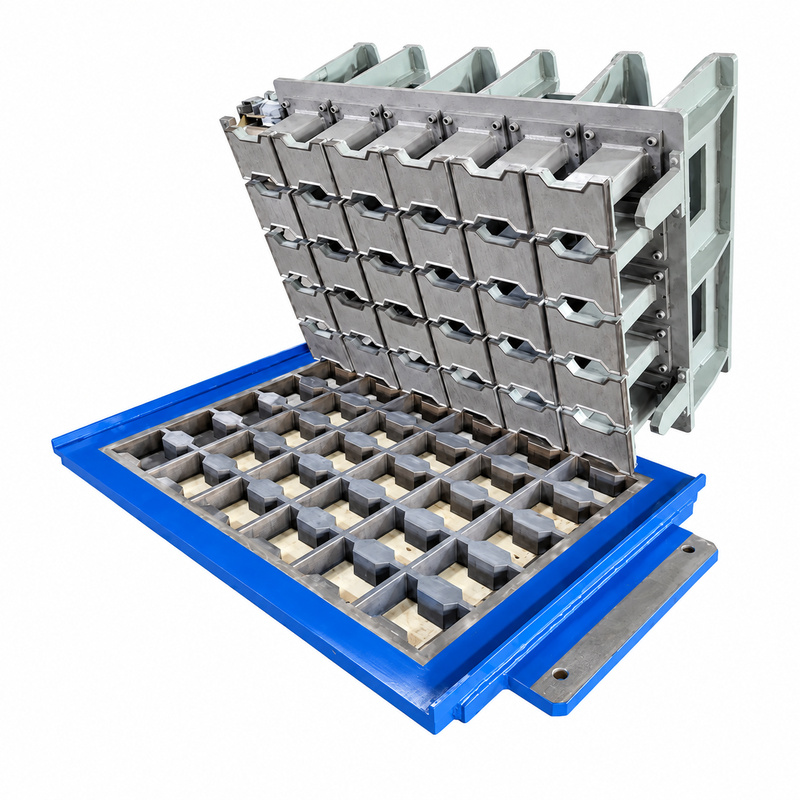
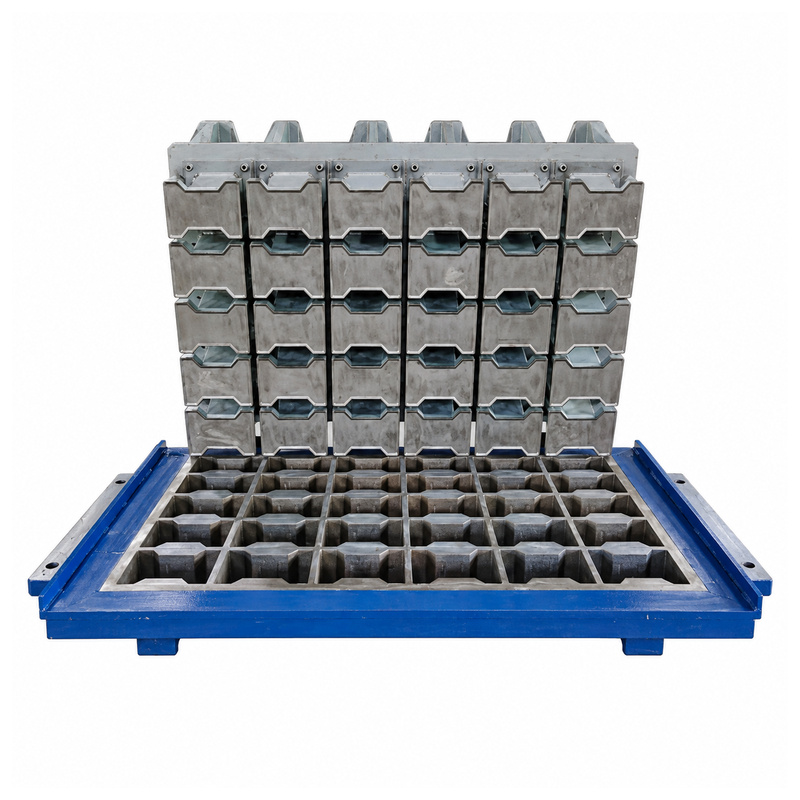
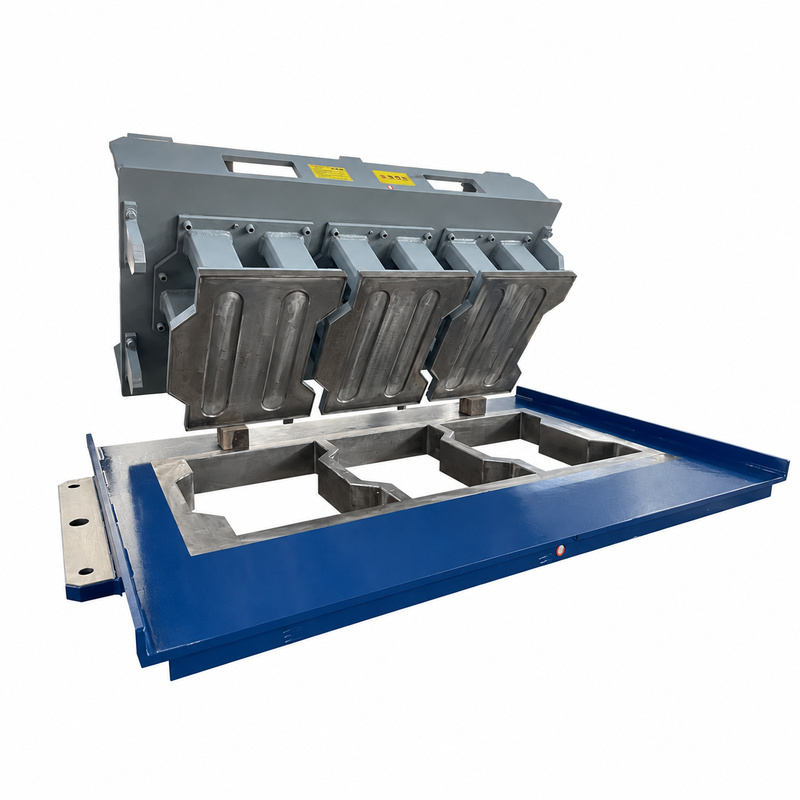
Accurate Profiles for Consistent Paver Fit
Interlocking outlines are machined to the approved product geometry. Consistent profiles help neighboring units fit together with the intended joint arrangement.
| Mould Model | IB-200 / IB-225 / Custom Interlocking Block Mould |
| Product Size | Typical: 200 × 100 × 60 mm; 200 × 100 × 80 mm; 225 × 112.5 × 60 mm (Custom sizes and interlocking designs available) |
| Thickness | 40–120 mm (design-dependent reference) |
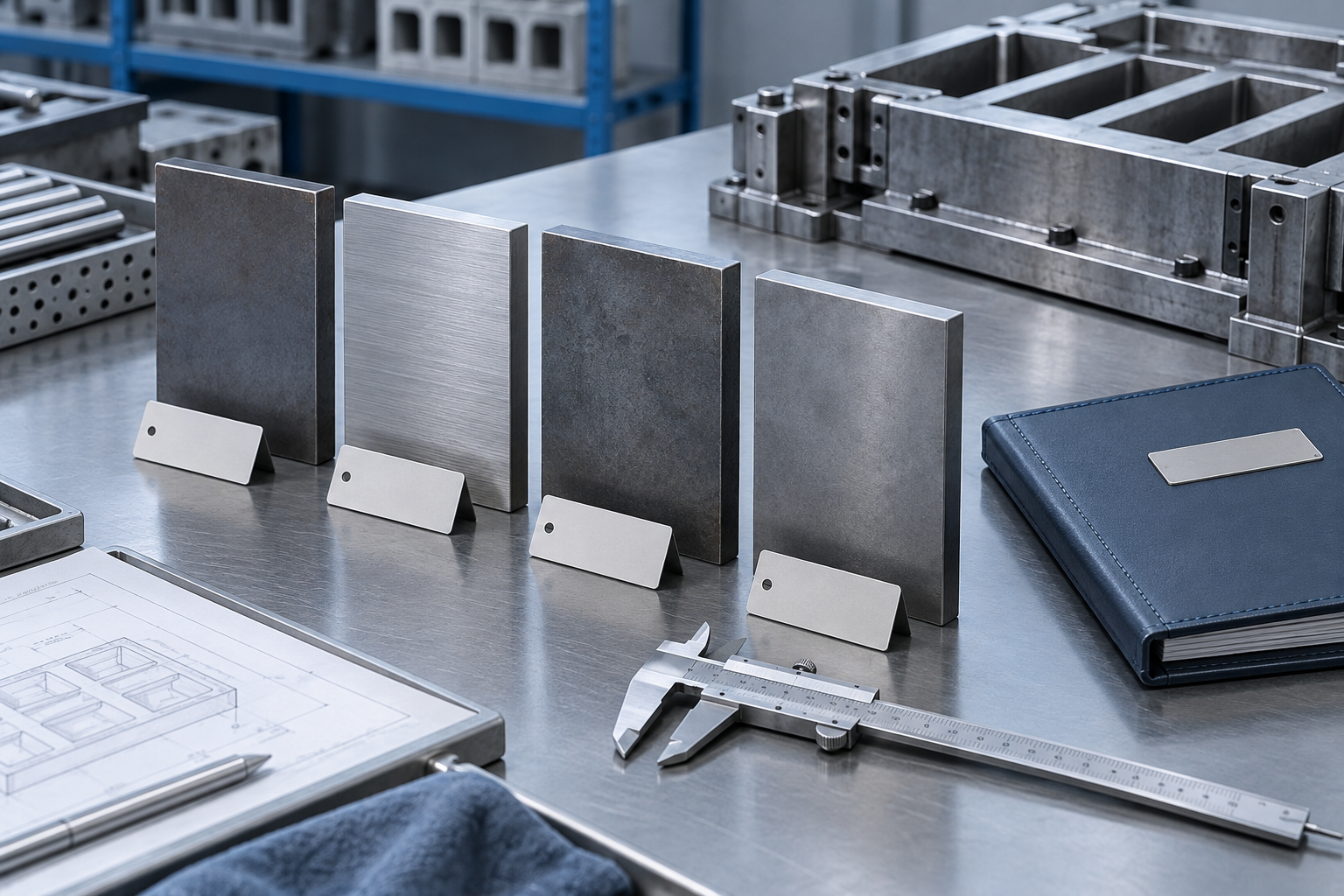
| Material / HRC | Wear-resistant alloy steel; precision-machined and heat-treated, HRC58–62 (reference) |
| Cavities/Cycle | Custom to paver size, mould layout and machine specifications |
| Machine Brand | HAWEN / HESS / MASA / ZENITH / QUADRA / other brands (subject to fit review) |
| Machine Model | QT4-15 / QT6-15 / QT8-15 / QT10-15 / QT12-15 / QT15 / QT18 / custom models (reference; fit review) |

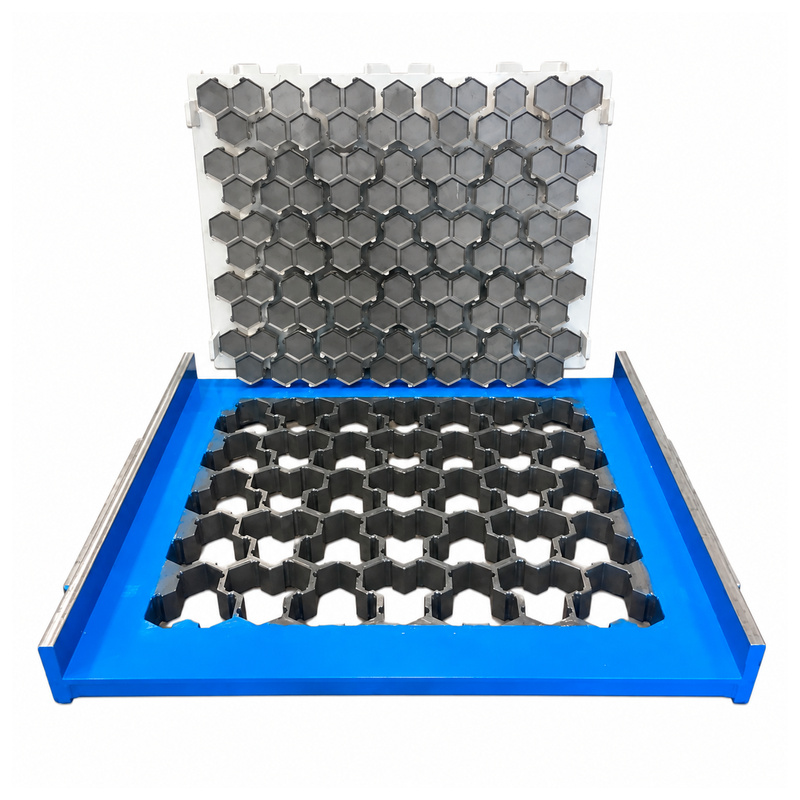
Interlocking outlines are machined to the approved product geometry. Consistent profiles help neighboring units fit together with the intended joint arrangement.
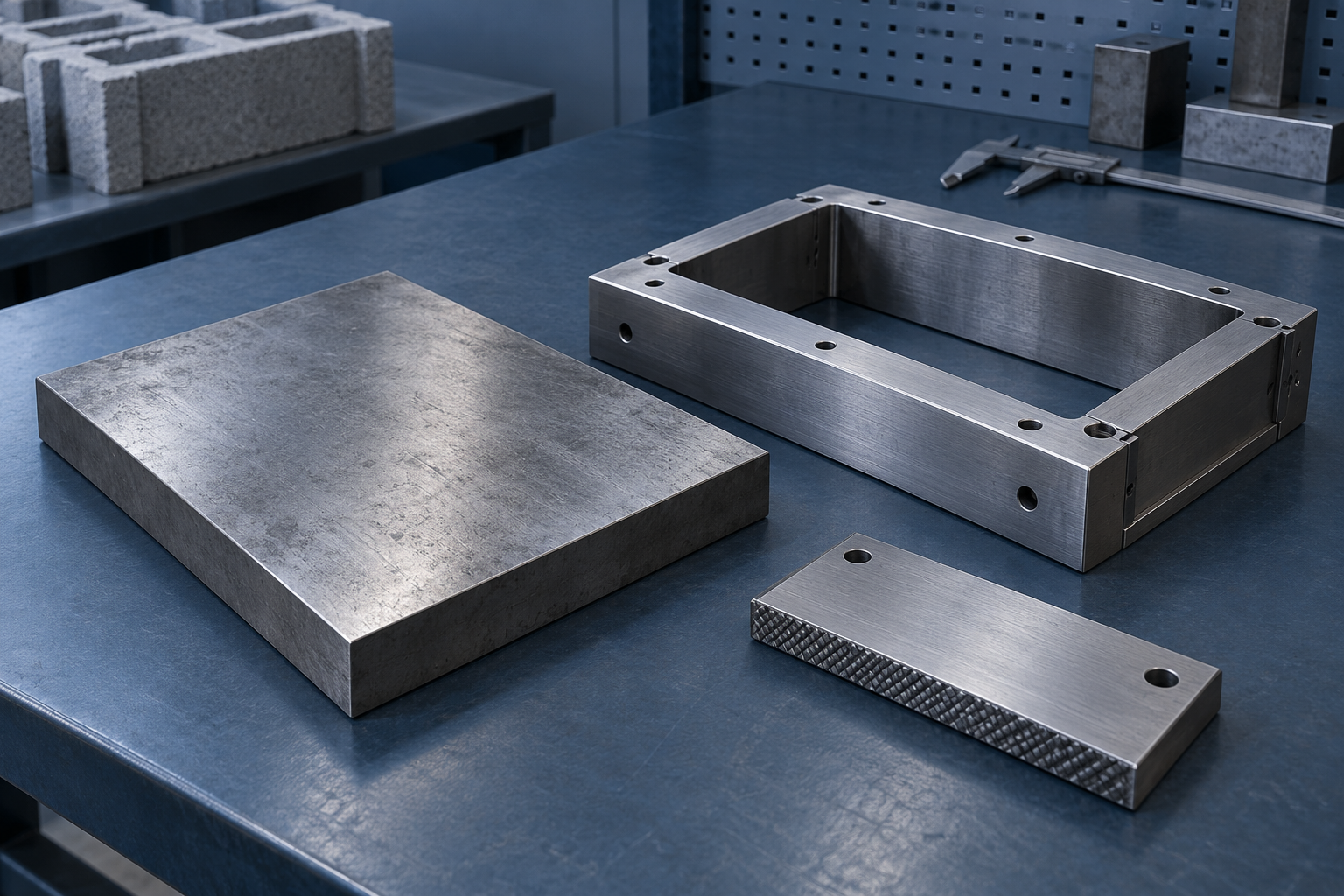
Paver thickness, chamfers, and connecting profiles can be developed according to your specifications. The final design is checked against machine capabilities and production requirements.
The specified paver mold clearance is 0.2–0.25 mm per side between the mold box and tamper head. Precision matching maintains the intended relationship between these forming components.
Illustrative material concept
Check block mould material traceability by linking agreed certificates, steel batch identification, component records and inspection evidence.
Read material guideIllustrative material concept
Review block mould steel selection through component loads, abrasion, machinability and material records before agreeing the specification.
Read material guidePrepare your product and machine information. Let’s review the tooling.
Send the finished block drawing and dimensions, machine brand and model, pallet dimensions and the mould mounting details. For a replacement, include photos or drawings of the existing mould.
The review connects the block design with the receiving machine, pallet, mounting arrangement and available forming space. Share the relevant machine and mould drawings so the interfaces can be checked before a proposal is confirmed.
Select your project purpose and describe the current tooling or the block shape you want to produce. Existing mould photos and a dimensioned product drawing help the team identify the information still needed.
Confirm the approved block drawing, cavity arrangement, machine interfaces and agreed mould specification. Include any project changes in the enquiry so the proposal can be reviewed against the latest requirements.

 Tel: +8618359454595
 Email: sale@hwmachines.com
 MP/WhatsApp: +8618359454595
 Manufacturer Address:Nanan, Quanzhou City, Fujian Province, China