Concrete Block Molds
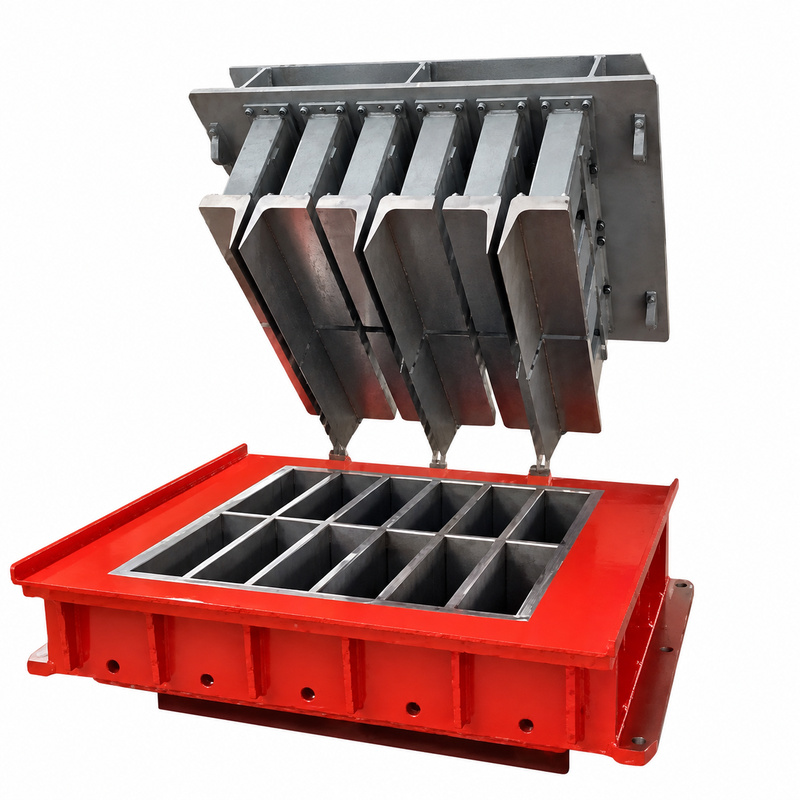
Hollow Block Mold
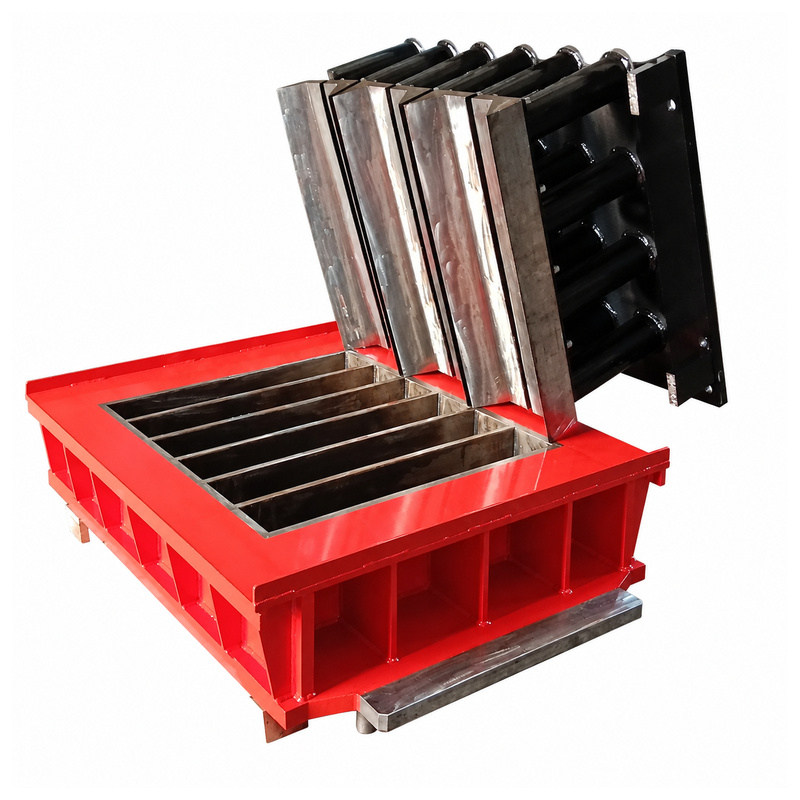
Solid Block Mold
Solid Brick Mold
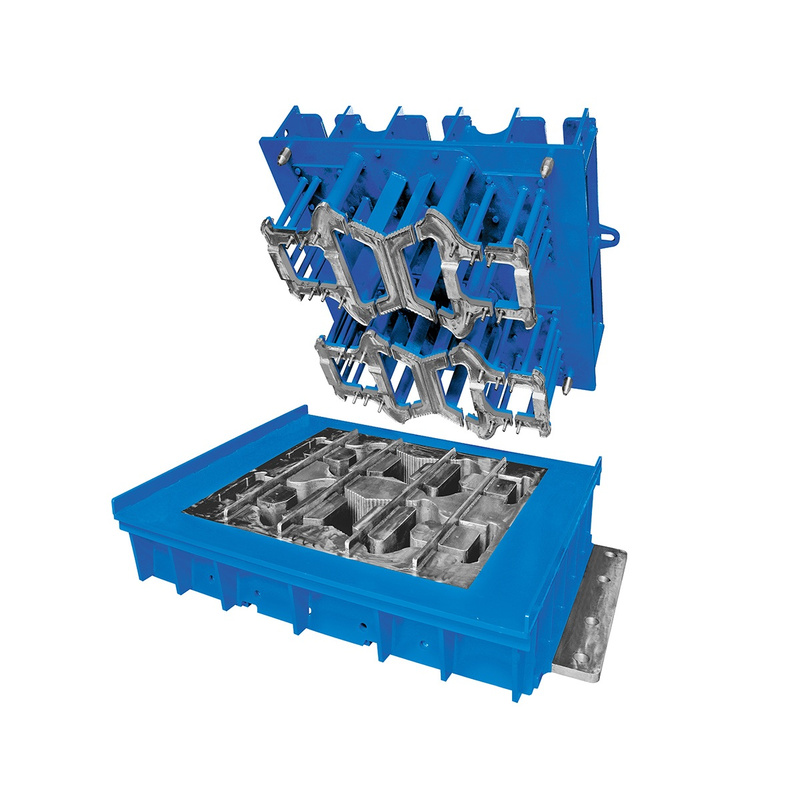
Interlocking Block Mold
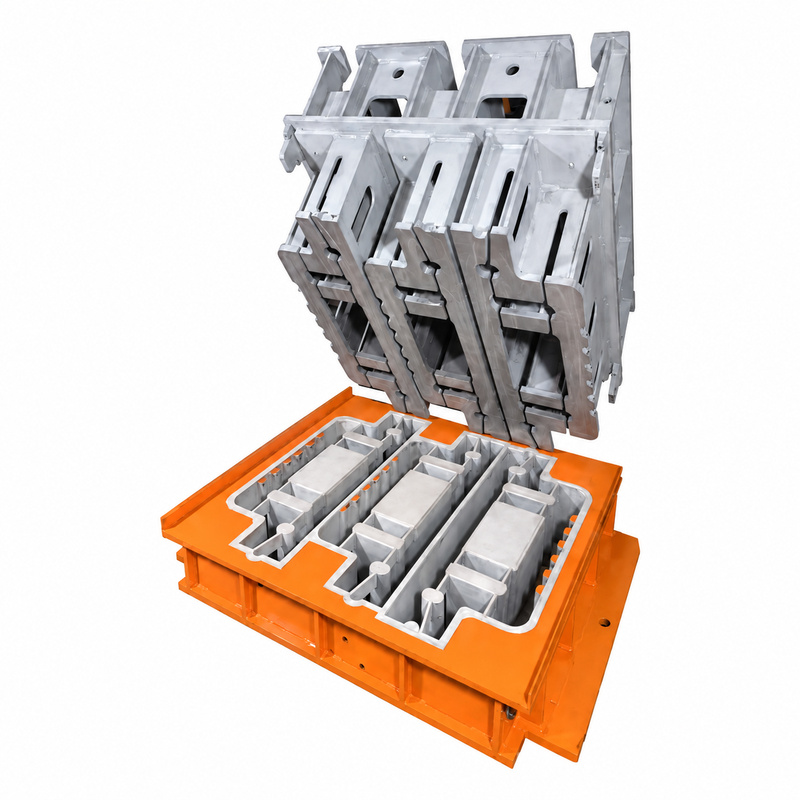
Thermal Block Mold
Author:HAWEN Block Mould Manufacturer TIME:2026-11-15
A letter that stands proud of a brick face corresponds to a recess in the contacting forming surface. A letter recessed into the product needs the complementary raised forming detail. Reading a tooling view as though it showed the finished brick can therefore reverse the intended meaning before the mark has even been reviewed.
Start with the desired product surface. State which face carries the mark, whether it is raised or recessed there, and how the finished mark should be read from that face. The tooling representation can then be interpreted as its complement, rather than allowed to become an accidental new product requirement.
In an ideal contact-section explanation, the product material occupies a recess in the forming surface. The finished mark rises above its surrounding product face while the complementary tool detail lies below its surrounding contact surface.
A raised forming detail occupies the space that will become the product depression. The finished mark lies below its surrounding brick face while the complementary detail projects from the contacting tool surface.
These are geometric relationships, not recommendations to choose one mark style. A real detail still needs review for its location, size, surrounding geometry and actual forming conditions. The explanation does not establish that any particular font, depth or fine feature can be made successfully.
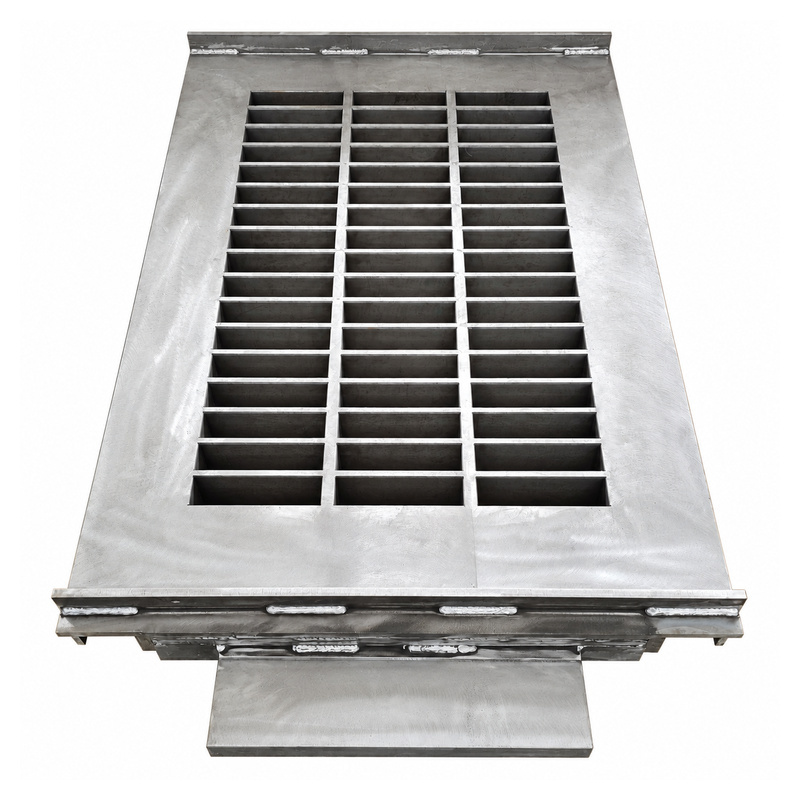
The phrase “engraved lettering” is especially easy to misunderstand when it lacks an object. Engraving into a forming surface and a depression in a finished product are descriptions of different surfaces. A clear sentence says where the recess belongs, instead of expecting everyone to infer it from a process word.
Likewise, a product rendering and a tooling drawing can look different while describing complementary sides of the same intended contact. Compare the named surfaces and their reference planes before deciding that one of the views contradicts the specification.
HAWEN's solid-brick product information asks for face details, recesses and molding orientation. That gives the review a product-specific starting point without supplying a universal lettering design.
Polarity and handedness are different ideas. Raised versus recessed concerns height relative to the surrounding surface. A left-right reflection concerns how an asymmetric mark is seen when two opposing contact faces are each viewed head-on.
For a conceptual stamp-and-impression example, keep the designated top edge upwards in both views. Look directly at the finished marked face. Then look directly at the complementary contact face after turning it to face the observer, again with its top edge upwards. With those declared views, the mark's left-right handedness is reflected between the two faces.
Use an abstract capital F to make the distinction. Its main upright is on the left in the readable product-face view. The corresponding head-on contact-face view has reflected handedness, with that upright on the other side. Simply typing the letters of a word in reverse order is not an accurate drawing of reflected glyphs.
| View | What stays defined | What is being interpreted |
|---|---|---|
| Finished product face | Named face, top edge upwards, viewed head-on | Required readable mark and product relief |
| Opposing contact face | Its corresponding top edge upwards, viewed head-on from its own exposed side | Complementary relief and reflected handedness |
A camera looking from another side, or a drawing projection with different viewing conventions, need not show the same apparent left-right relationship. Identify the surface normal and top reference in the actual technical review. Saying only “this picture is backwards” leaves the essential viewing question unanswered.
This is also different from deciding whether a finished brick may be rotated in a product arrangement. Here the two surfaces belong to a product and its contacting forming detail. The issue is the positive/negative contact relationship, rather than permission to turn the same finished unit through different orientations.
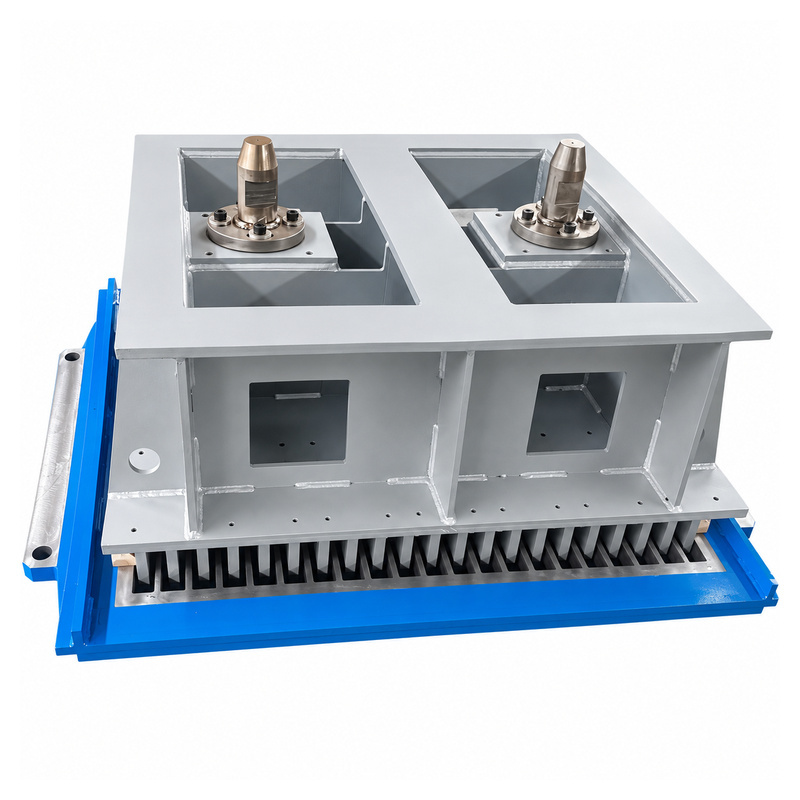
A useful product-level proof identifies the actual mark, its intended face, the required viewing orientation and its relief relative to that face. It makes clear what a finished unit should show. The corresponding forming detail can then be reviewed against that defined result.
If the only available image is a tool-face close-up, the buyer may be able to identify a question about the complementary geometry, but should not silently treat that image as the final readable artwork. Ask which product-face view it represents. Conversely, a readable product graphic alone does not define every three-dimensional forming feature behind it.
Keep appearance selection and manufacturing assessment connected without collapsing them into one approval. Confirming the intended word or symbol does not establish its achievable relief, finish or release. A proposed technical change to the lettering geometry should return to the product reference if it alters what the buyer expects to see.
The external molding reference below illustrates the general raised/recessed complement. Its plastic-part advice on fonts, relief sizes, finish and production economics is not applied to concrete. HAWEN's actual configuration review must address the specified brick and receiving equipment on their own terms.
The resulting question is concrete: does the view show the required brick face, or its complementary forming surface, and have polarity and viewing direction been interpreted accordingly? Resolve that before accepting or rejecting a detail solely because the tool image looks recessed or reversed.
General contact-geometry reference: Protolabs: Adding Text to Injection-Molded Parts. Only the positive/negative surface relationship is used here; plastic molding design rules are outside this concrete-tooling explanation.
 Tel: +8618359454595
 Email: sale@hwmachines.com
 MP/WhatsApp: +8618359454595
 Manufacturer Address:Nanan, Quanzhou City, Fujian Province, China