

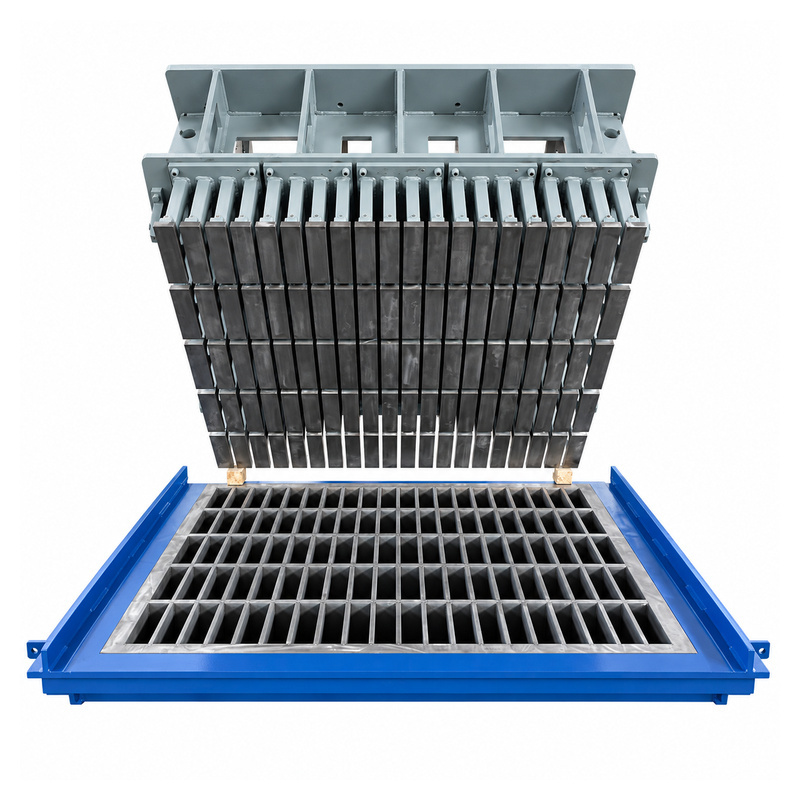
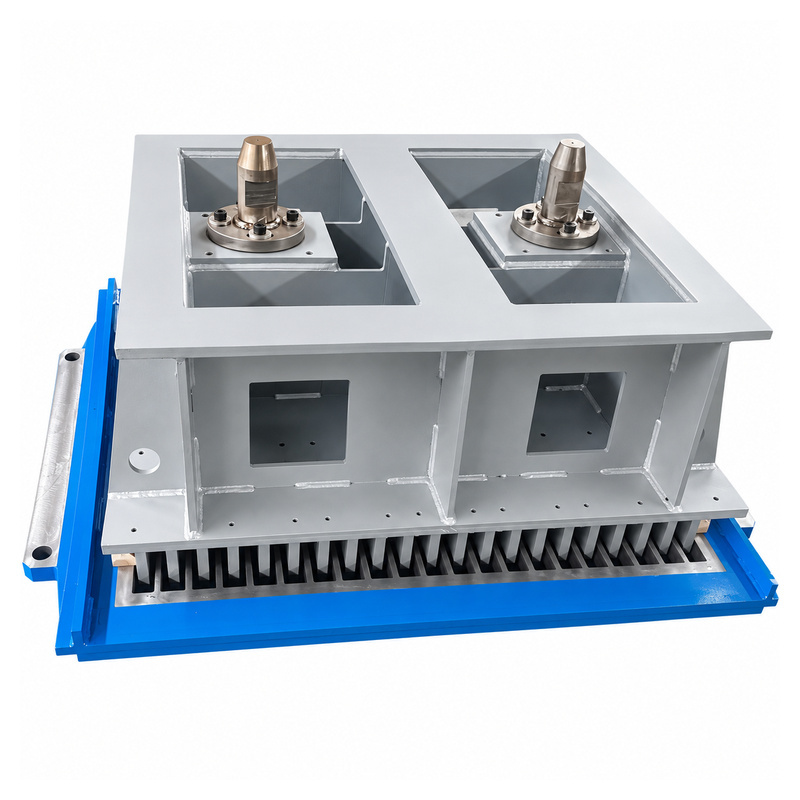
 Mould Model
 Block Size
 Material / HRC
 Cavities/Cycle
 Mounting
 Certification

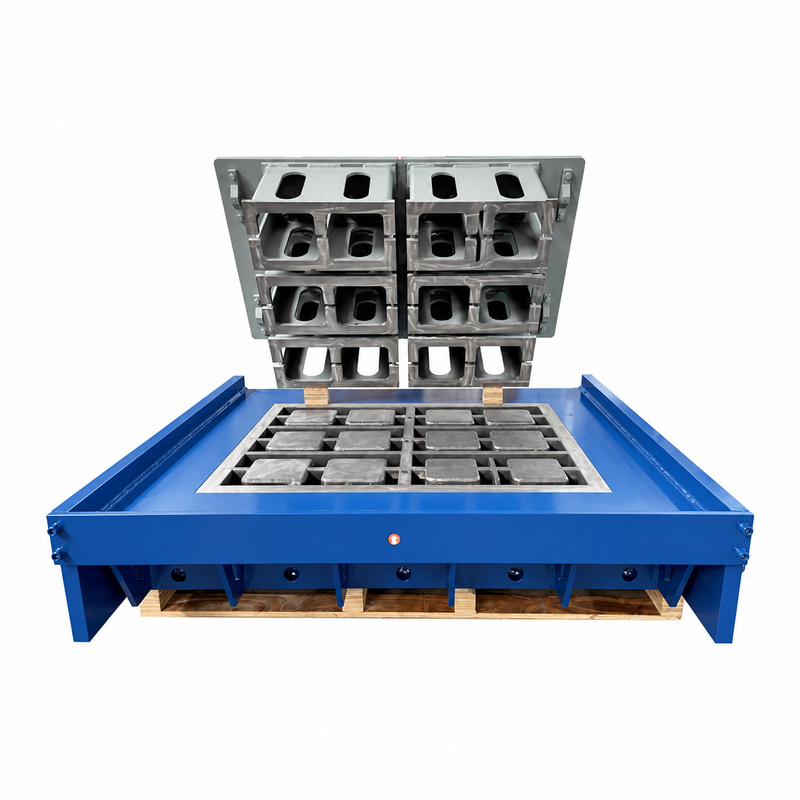
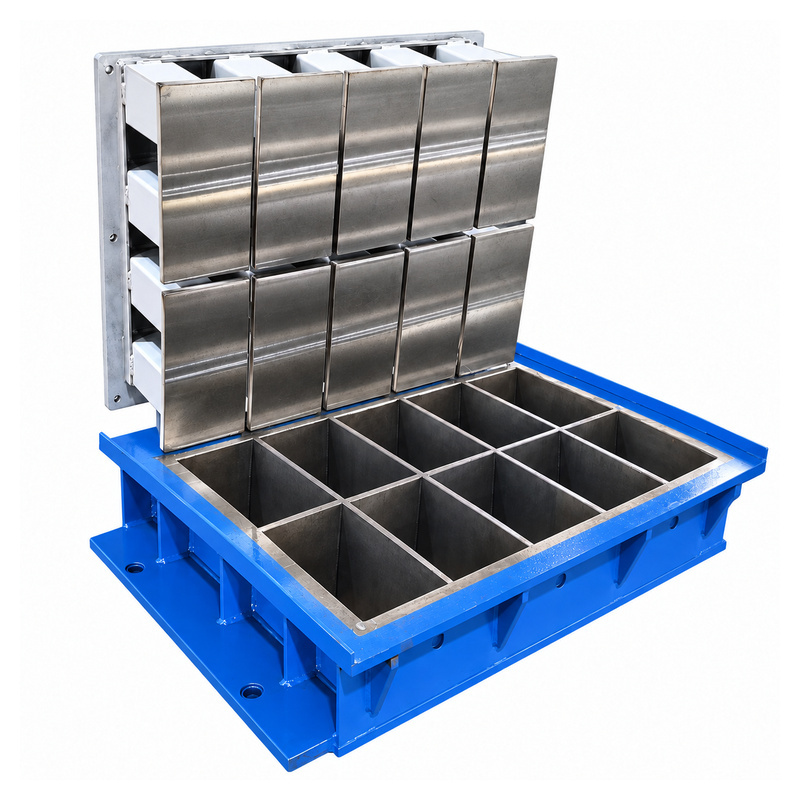
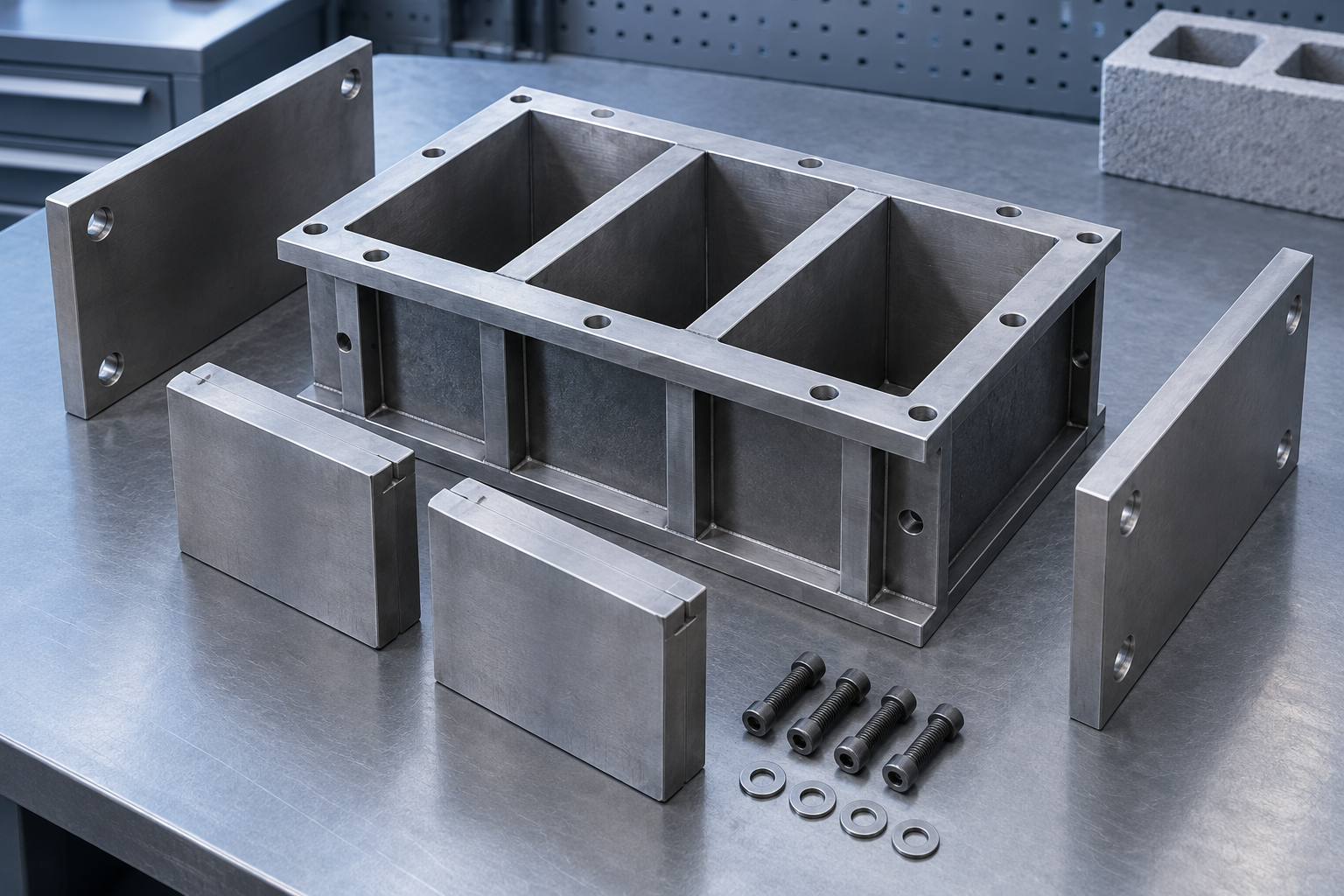
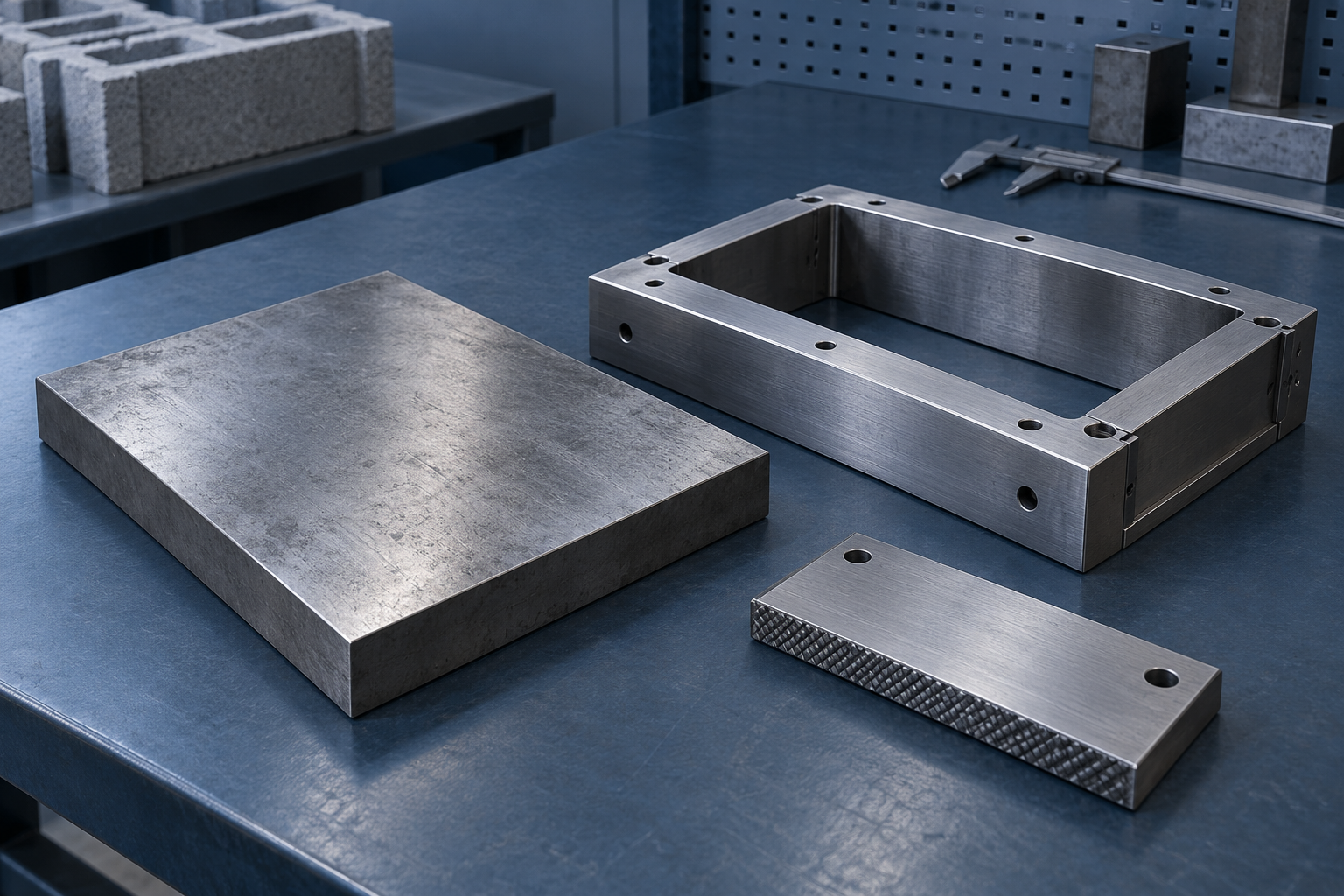
Multiple Cavities for Repeated Brick Production
Cavity arrangements are developed around the brick dimensions and available machine working area. The layout establishes how many bricks can be formed in each cycle.
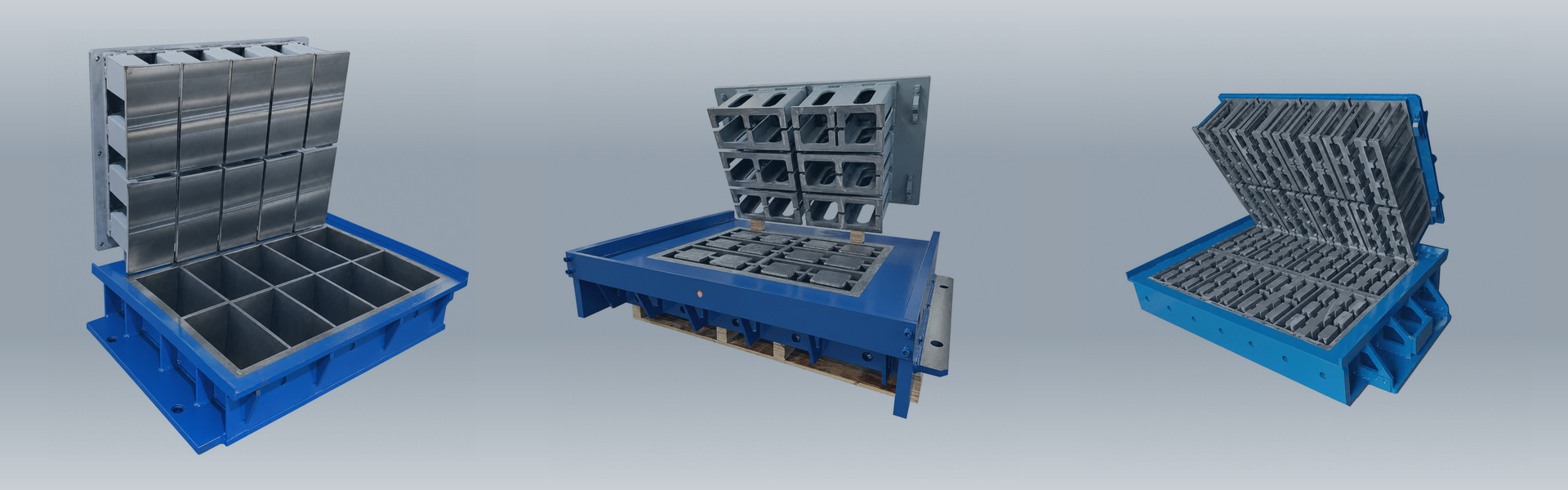
| Mould Model | BR-240 / BR-200 / Custom Solid Brick Mould |
| Block Size | Typical: 240 × 115 × 53 mm; 200 × 100 × 60 mm; 200 × 100 × 50 mm (Custom sizes available) |
| Block Height | 40–100 mm (design-dependent reference) |
| Material / HRC | Wear-resistant alloy steel; heat-treated, HRC58–62 (reference) |
| Cavities/Cycle | Custom to brick size, mould layout and machine specifications |
| Machine Brand | HAWEN / HESS / MASA / ZENITH / QUADRA / other brands (subject to fit review) |
| Machine Model | QT4-15 / QT6-15 / QT8-15 / QT10-15 / QT12-15 / QT15 / QT18 / custom models (reference; fit review) |
| Pallet Size | Custom to the receiving block-making machine |
| Life (cycles) | Approx. 80,000–120,000 cycles (reference; operating conditions apply) |
| Mounting | Reviewed against machine mounting drawings |
| Certification | CE, ISO |
Cavity arrays and matching tamper shoes for your concrete masonry brick format.
A solid brick mold produces compact concrete masonry bricks in a defined size and profile. Discuss your required unit geometry and machine configuration with HAWEN to develop a mold proposal around the approved drawing. The specification can be reviewed for a new product or for replacement tooling in an existing production line.
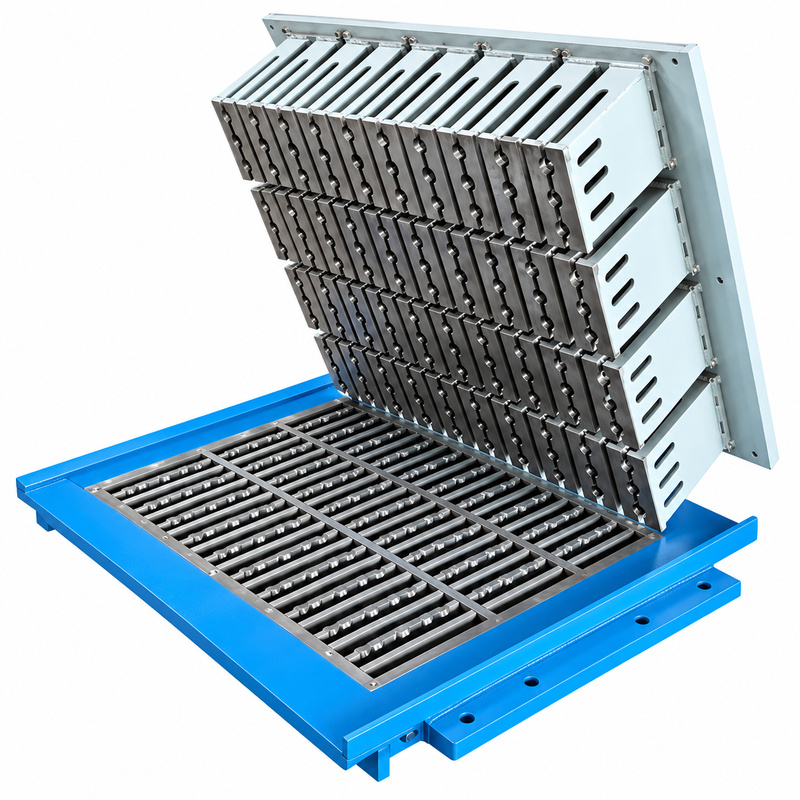
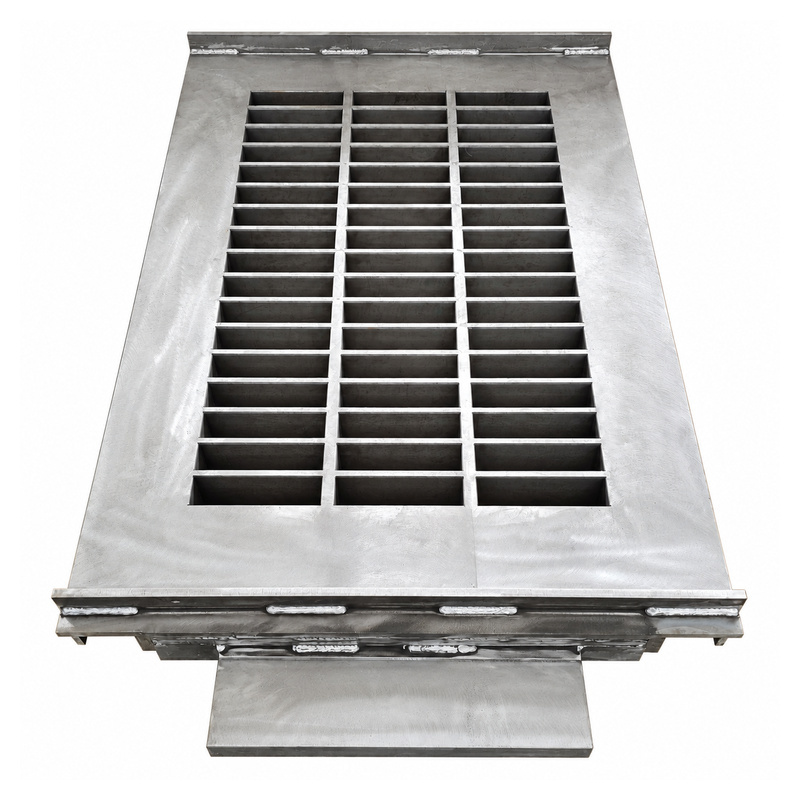
During trial production, compare bricks from the center and edges of the pallet. Look for chipped corners, incomplete filling, dragging marks and height differences. Agree how dimensions and appearance will be sampled and recorded.
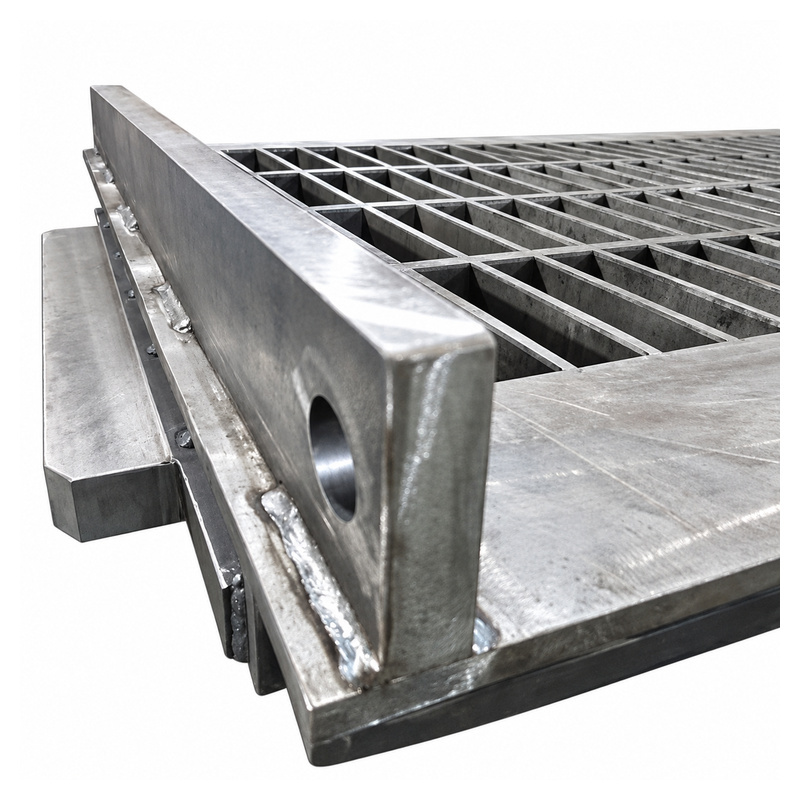
Final dimensions, cavity count, machine compatibility, materials, inspection criteria and delivery scope are confirmed in the quotation and approved technical documents. Provide the exact machine model and current interface details when requesting replacement tooling. Finished-product performance must be assessed for the agreed materials, process and intended use.
Send HAWEN your drawings, reference samples or photos, machine details and delivery destination to request a configuration review and quotation.
Send your product drawing, machine details, production pallet dimensions and required layout for a configuration review.
Explore Concrete Block Molds, or contact HAWEN for a mold quotation. The quotation and approved technical documents confirm the final tooling and supply requirements.
| Parameter | Specification |
|---|---|
| Mould Model | BR-240 / BR-200 / Custom Solid Brick Mould |
| Finished Block Size | Typical: 240 × 115 × 53 mm; 200 × 100 × 60 mm; 200 × 100 × 50 mm (Custom sizes available) |
| Block Height Range | 40–100 mm (design-dependent reference) |
| Mould Material / Hardness | Wear-resistant alloy steel; heat-treated, HRC58–62 (reference) |
| Cavities per Cycle / Layout | Custom to brick size, mould layout and machine specifications |
| Compatible Machine Brand | HAWEN / HESS / MASA / ZENITH / QUADRA / other brands (subject to fit review) |
| Compatible Machine Model | QT4-15 / QT6-15 / QT8-15 / QT10-15 / QT12-15 / QT15 / QT18 / custom models (reference; fit review) |
| Pallet Size | Custom to the receiving block-making machine |
| Mould Service Life Reference (cycles) | Approx. 80,000–120,000 cycles (reference; operating conditions apply) |
| Frame Interface Type | Reviewed against machine mounting drawings |
Reference specifications are subject to approved product and installation drawings. Match the brand and exact machine model as one reviewed configuration; QT references do not establish compatibility with every listed brand. Confirm the components receiving the stated alloy-steel treatment and the hardness measurement locations. The 80,000–120,000-cycle figure is an approximate mould service-life reference affected by machine condition, raw materials and brick design; it is not a forming-time figure or a guaranteed life.
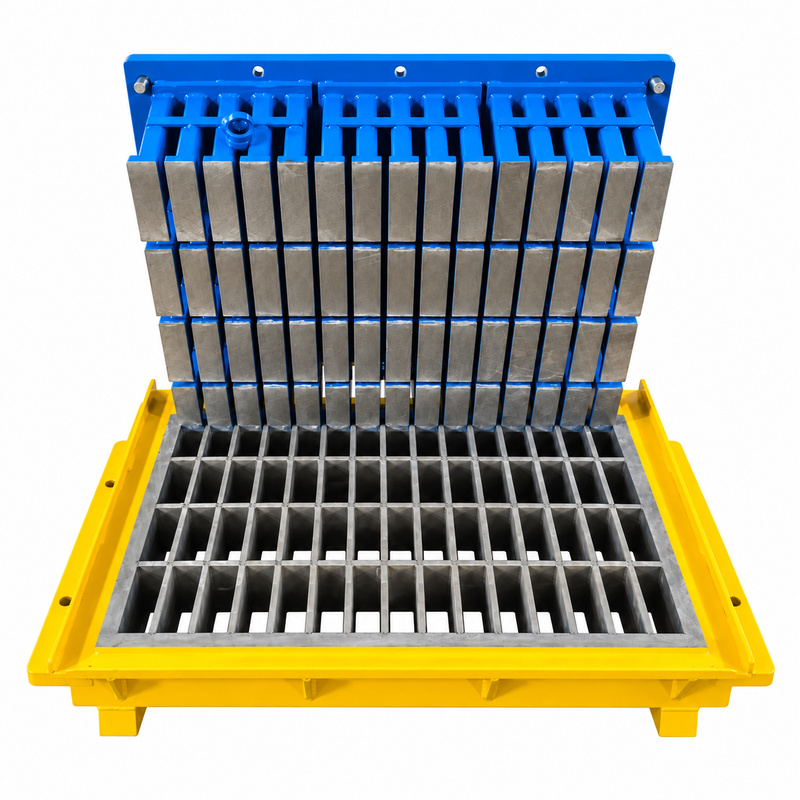
Cavity arrangements are developed around the brick dimensions and available machine working area. The layout establishes how many bricks can be formed in each cycle.
Length, width, height, chamfers, and suitable edge profiles can be incorporated into the design. This allows the mold to reproduce the brick format required by your market.
Precision machining and matching of mold and tamper components support dimensional consistency between cavities. This helps maintain a uniform product format across the production pallet.

 Tel: +8618359454595
 Email: sale@hwmachines.com
 MP/WhatsApp: +8618359454595
 Manufacturer Address:Nanan, Quanzhou City, Fujian Province, China




2026-10-25
We needed a mould for consistent brick dimensions. The team helped clarify the product drawing and cavity arrangement for our requirements.
HAWEN technical summary 2026-10-20
HAWEN solid brick molds based on confirmed concrete masonry brick drawings. Review brick orientation, edge details, cavity layout and machine interfaces.