Concrete Block Molds
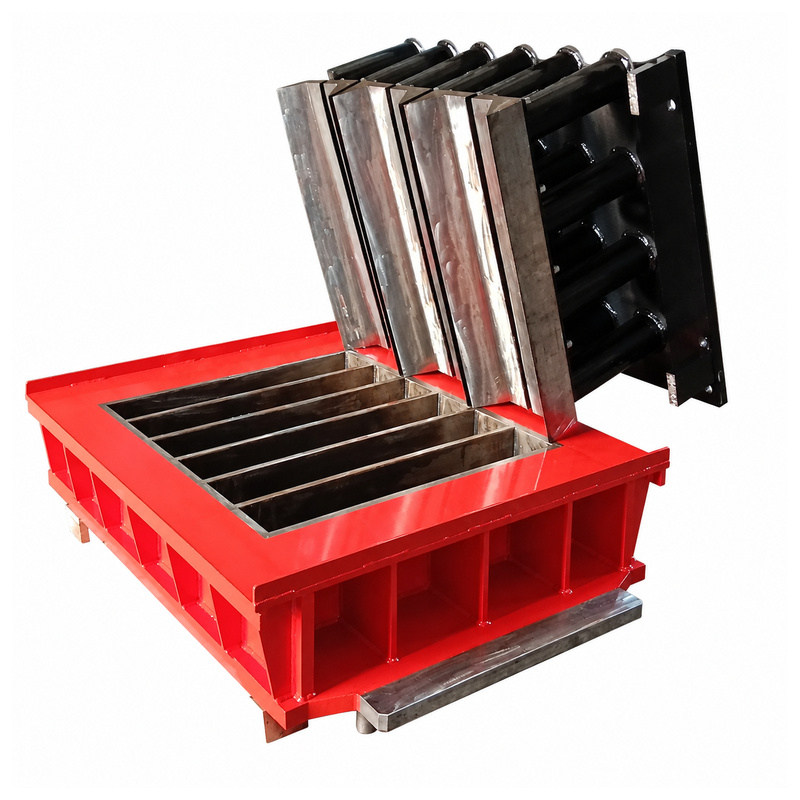
Hollow Block Mold
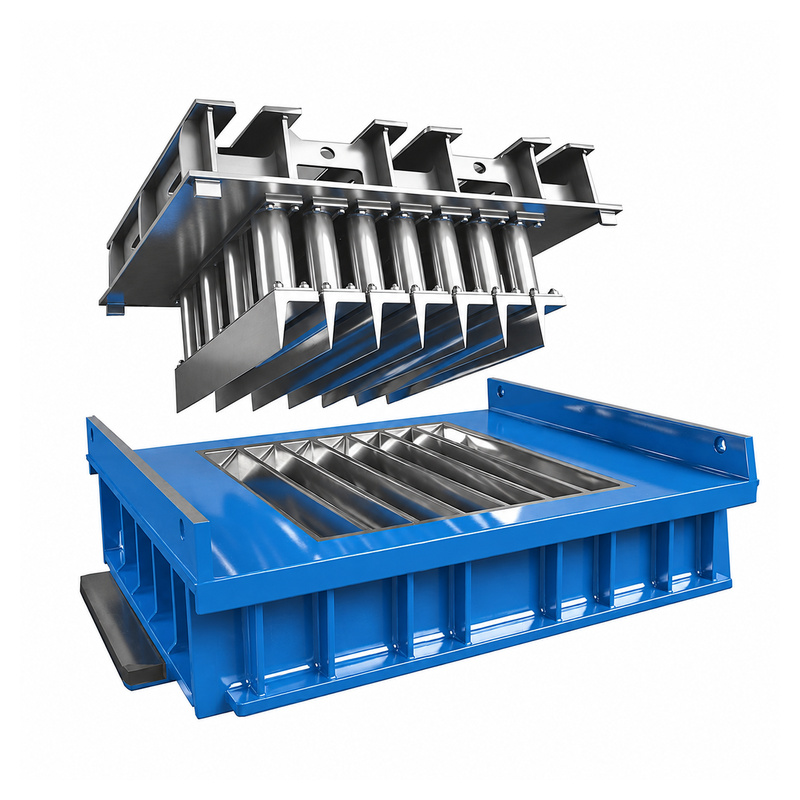
Solid Block Mold
Solid Brick Mold
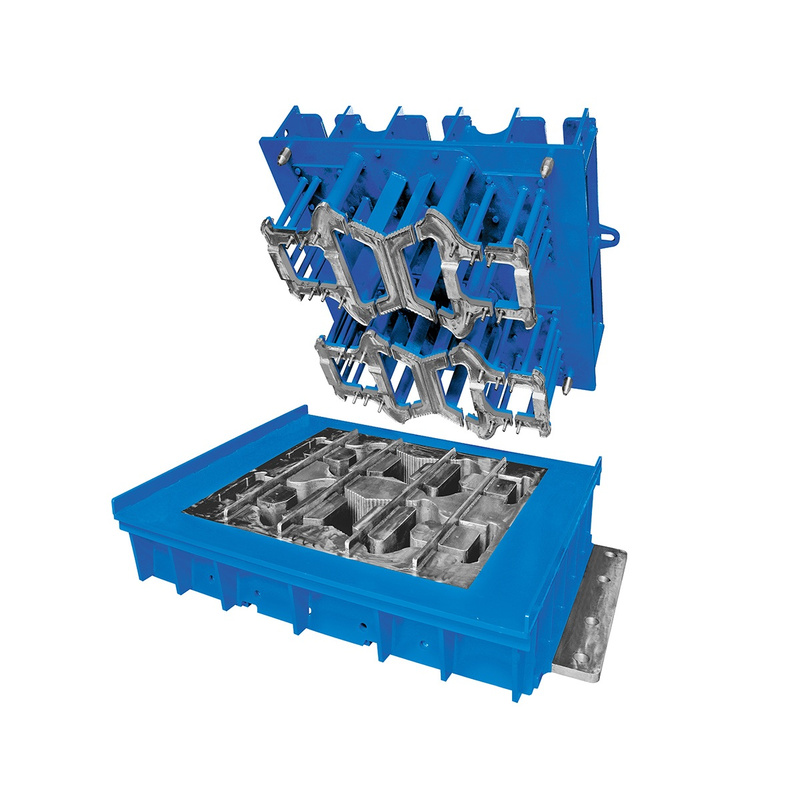
Interlocking Block Mold
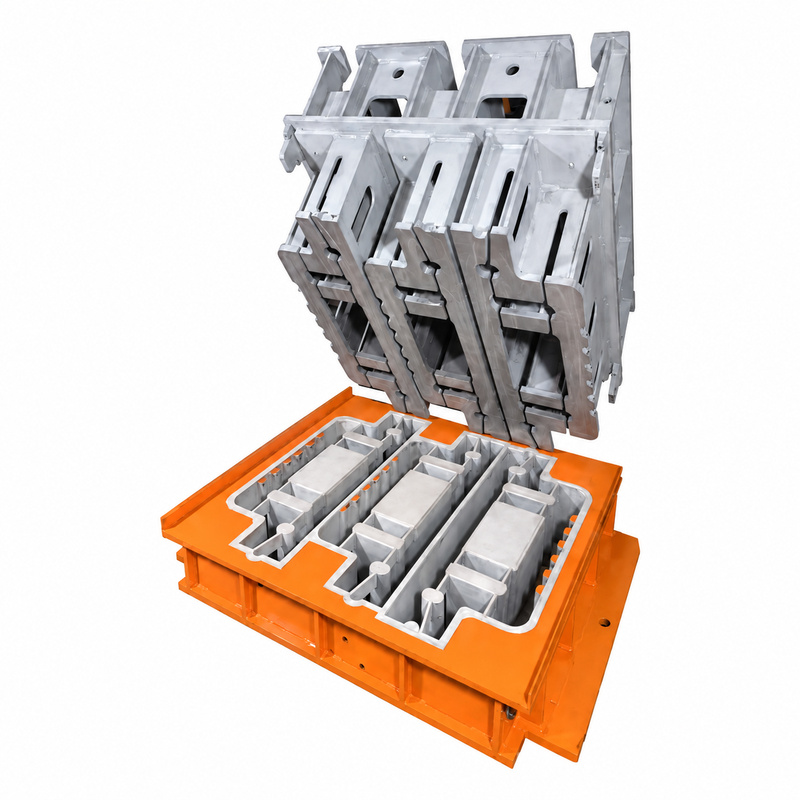
Thermal Block Mold
Author:HAWEN Block Mould Manufacturer TIME:2026-11-13
Length and width do not, by themselves, prove that a solid block has the intended right-angled corners. Two ideal outlines can have the same adjacent side lengths and different corner geometry. When trial measurements are summarised, keep the conclusion about size separate from the conclusion about squareness.
HAWEN's solid-block trial scope names dimensions and squareness as distinct checks. The geometric examples below explain why that distinction matters. They do not supply a measuring procedure, a product tolerance or a way to approve a real block from two diagonals alone.
Imagine two ideal planar parallelograms with adjacent side lengths of four and three abstract units. In a parallelogram, both pairs of opposite sides are parallel; that assumption is part of this particular demonstration. These are mathematical shapes, rather than HAWEN block dimensions or proposed product profiles.
Here the two inputs are lengths along adjacent edges. A report's word “width” could instead mean a perpendicular separation between specified reference lines or faces. That would supply different geometric information. Establish what the actual arrows and measurement references describe before applying this example; a familiar dimension label does not settle its start, end or direction.
| Property | Rectangle R | Oblique parallelogram P |
|---|---|---|
| Adjacent side lengths | 4 and 3 | 4 and 3 |
| Included corner angle | 90 degrees | 60 degrees |
| One diagonal | 5 | Square root of 37 |
| Other diagonal | 5 | Square root of 13 |
R has right angles and equal diagonals. P has the same adjacent edge lengths, but its altered angle produces different diagonals. A summary reporting only those two edge lengths would not distinguish them.
The table uses diagonal lengths to demonstrate the geometry. It does not say which instrument, reference faces or method a real inspection should use. Actual molded units have surfaces and measurement conditions that an ideal outline leaves out.
Within a planar parallelogram, equal diagonals do imply a rectangle. It would be wrong to present another parallelogram as an equal-diagonal counterexample with non-right corners. The geometric assumptions determine what follows from the observation.
A general quadrilateral is a wider class. For example, an ideal isosceles trapezoid can have equal diagonals while its corners are not right angles. Its unequal parallel bases mean it is not the same parallelogram case.
Use abstract points A(−2, 0), B(2, 0), C(1, 2) and D(−1, 2), connected in that order. The lower base AB has length four and the upper base CD has length two. Both diagonals AC and BD have length equal to the square root of thirteen. The sloping sides meet the bases at non-right angles.
This example changes the assumptions openly. It demonstrates why “equal diagonals” alone, without the relevant shape conditions, is a narrower statement than “the required rectangular geometry has been established.”
Neither ideal example addresses out-of-plane distortion, face flatness, parallelism through a three-dimensional unit or local edge damage. Adding a correct planar inference does not resolve those other properties. A real inspection conclusion should name the features and scope actually assessed.
Additional information can legitimately support a stronger conclusion when its assumptions are met. For an ideal planar triangle, sides of three and four joined by a diagonal of five establish the enclosed right angle by the converse of the Pythagorean theorem. That concerns the particular triangle identified. It does not automatically establish every other corner of an otherwise unspecified quadrilateral.
The distinction is between a justified geometric inference and a convenient shortcut. Retain the reference points that make the inference valid. A diagonal detached from its endpoints, adjacent sides or shape assumptions cannot carry the same conclusion merely because it is the number expected for a rectangle.
Suppose a fictional trial summary lists two adjacent size readings and then says “rectangular profile accepted.” The first decision is whether that evidence supports the stated corner conclusion. The examples show why the size entries alone leave a geometric question unanswered.
If another summary adds diagonal readings, identify the geometric assumptions and the agreed assessment method before extending its conclusion. It may provide useful evidence without representing a universal squareness test. A buyer should not invent the missing assumptions because the values happen to match.
The same care applies when a diagram uses the word “square.” A rectangular solid unit can have right-angled plan corners without having four equal sides. Here, squareness concerns the specified corner geometry; it does not rename every rectangular masonry unit as a square product.
For the real product, start from its intended profile and accepted references. An intentionally profiled or nonrectangular unit requires its own specified geometry; a rectangle demonstration cannot impose right angles on it. The point is to assess the intended feature, rather than add a generic diagonal requirement to every order.
HAWEN's solid-block face and sample review includes dimensions, squareness and relevant faces. Its dimensional-check guidance calls for agreed features, methods and acceptance requirements. Those references define what a real result needs to address.
A useful review note can therefore be specific: the stated length and width results address their named dimensions, while the intended corner geometry needs the agreed squareness evidence. If that evidence has already been obtained, include its reference rather than replacing it with a bare “looks rectangular” comment.
This preserves a legitimate size result without asking it to prove an additional property. It also gives the technical team a precise remaining question, instead of recommending a mold change on the basis of an incomplete geometric inference.

 Tel: +8618359454595
 Email: sale@hwmachines.com
 MP/WhatsApp: +8618359454595
 Manufacturer Address:Nanan, Quanzhou City, Fujian Province, China