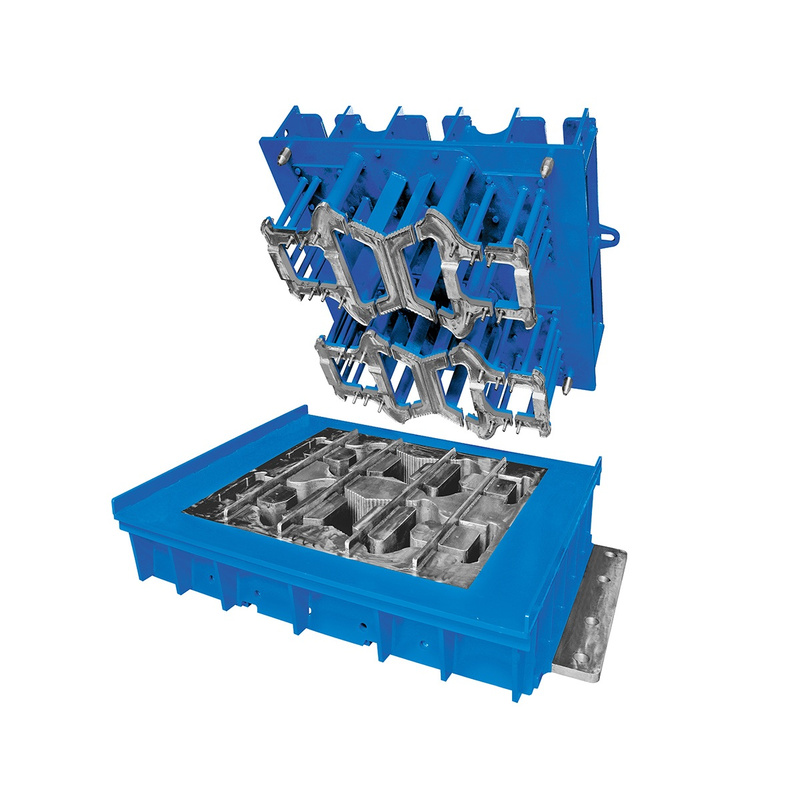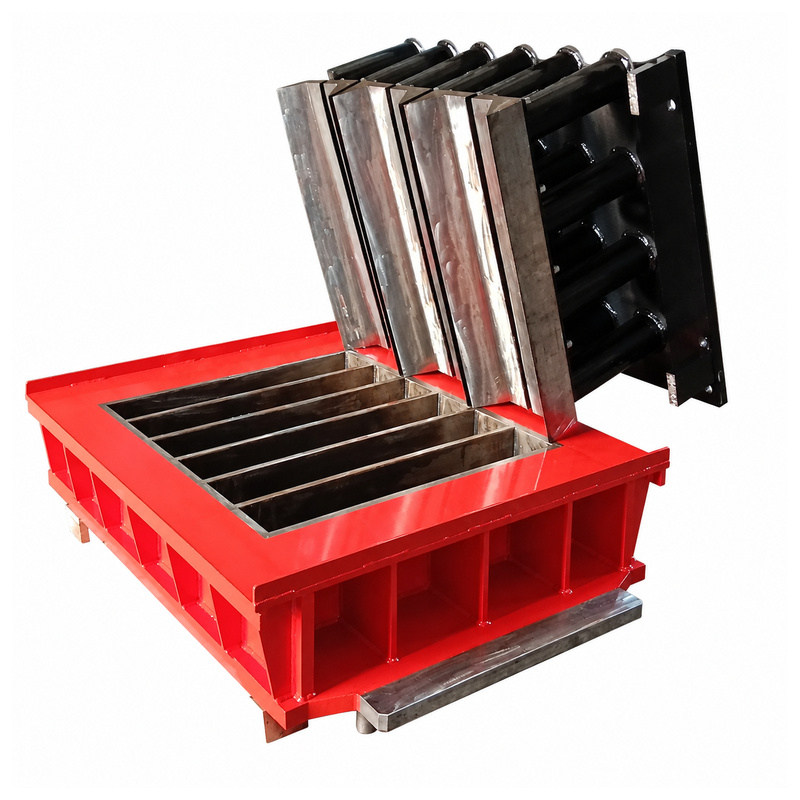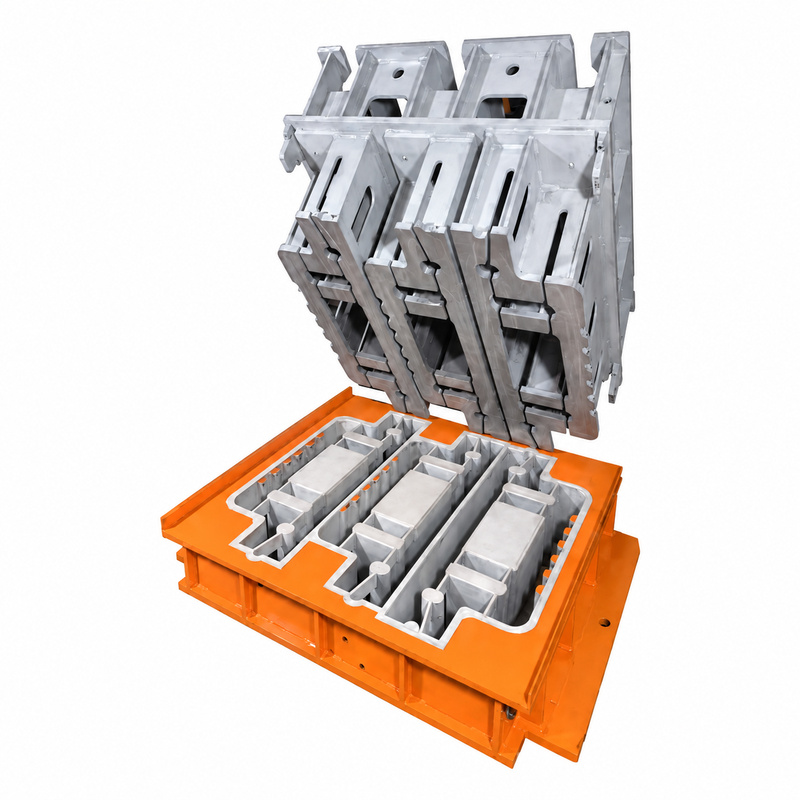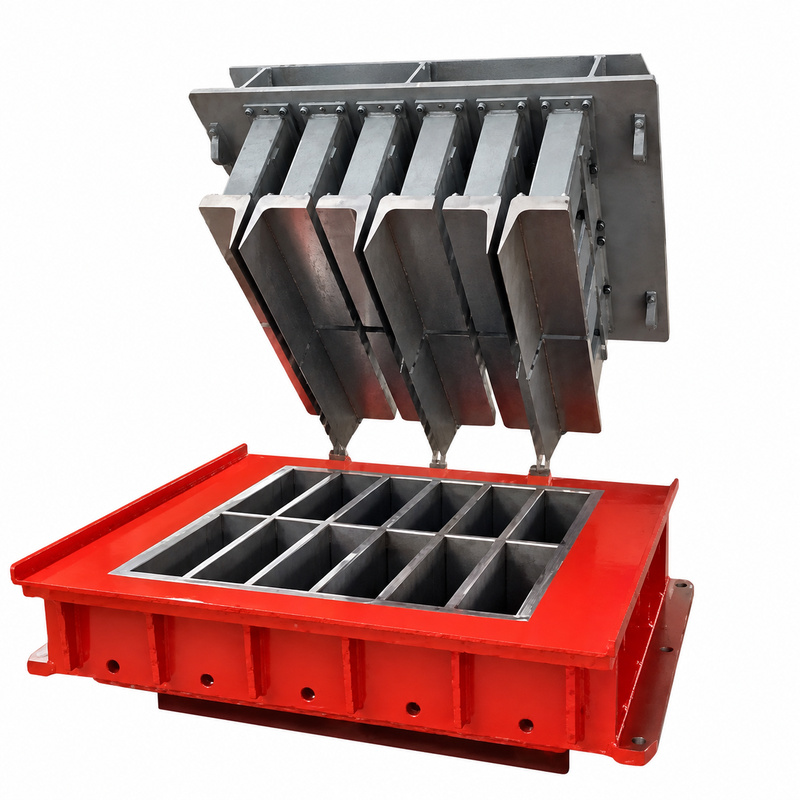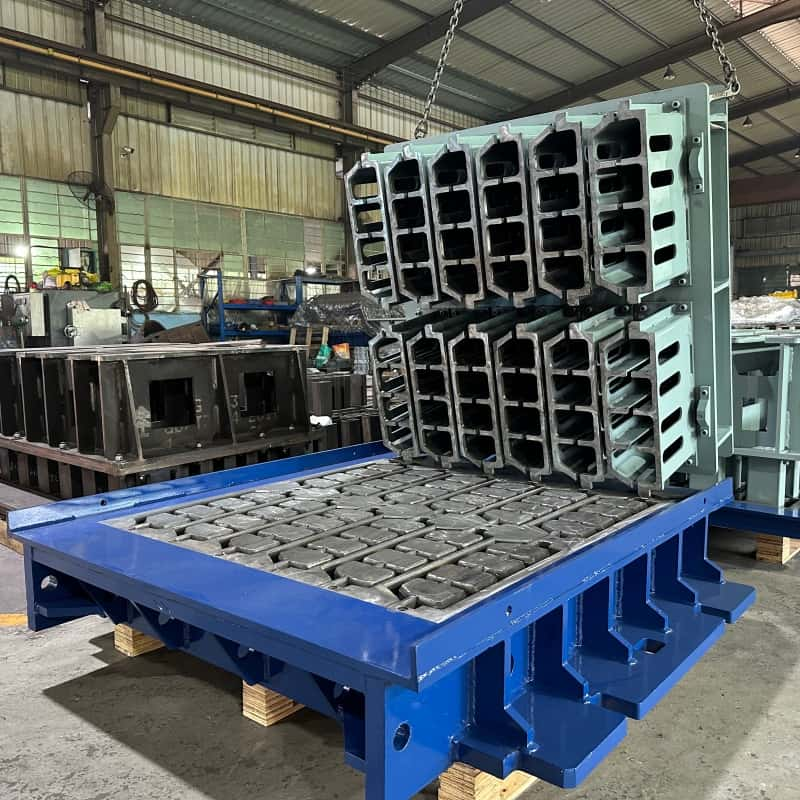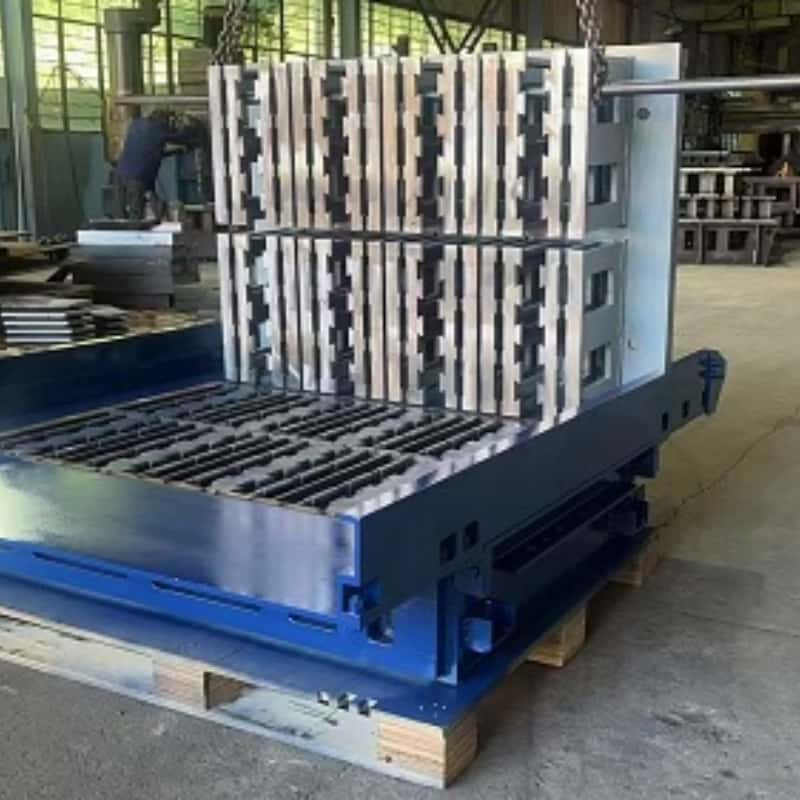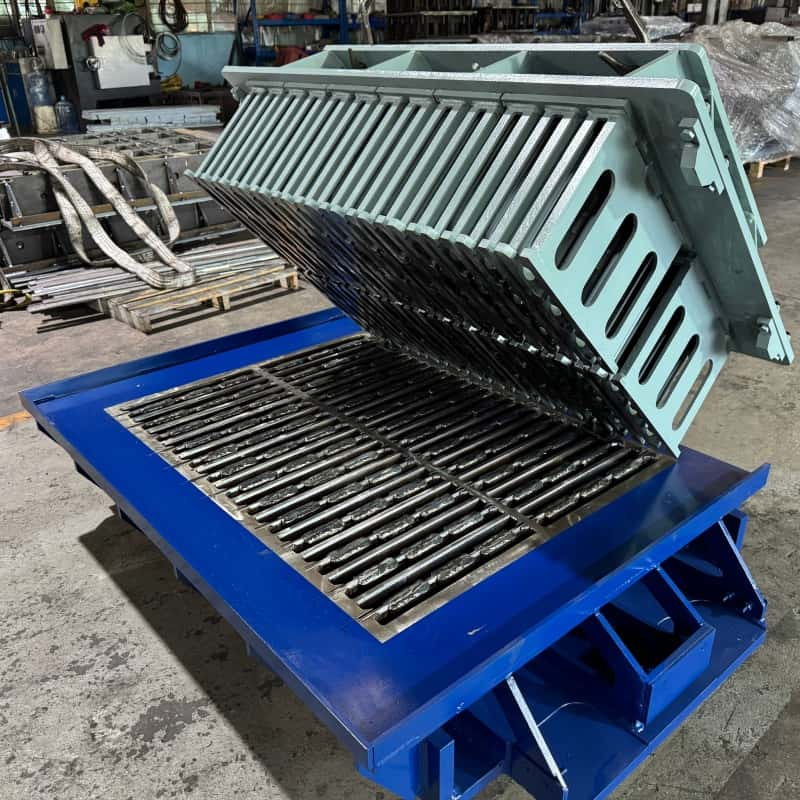
Concrete Block Molds
Hollow Block Mold
Solid Block Mold
Solid Brick Mold
Interlocking Block Mold
Thermal Block Mold
Author:HAWEN Block Mould Manufacturer TIME:2026-11-12
A solid-block layout can fit the available forming area while leaving a separate mass question unresolved. More positions put more fresh product on the pallet. Before a proposed cavity count proceeds to the receiving equipment's load review, combine the relevant unit masses and pallet mass on the same basis as the equipment reference.
This calculation prepares one input for that review. Static mass arithmetic does not approve handling, dynamic loading, support distribution or machine operation. Its useful role is to identify a missing or inconsistent mass basis before a space-efficient layout is treated as fully assessed.
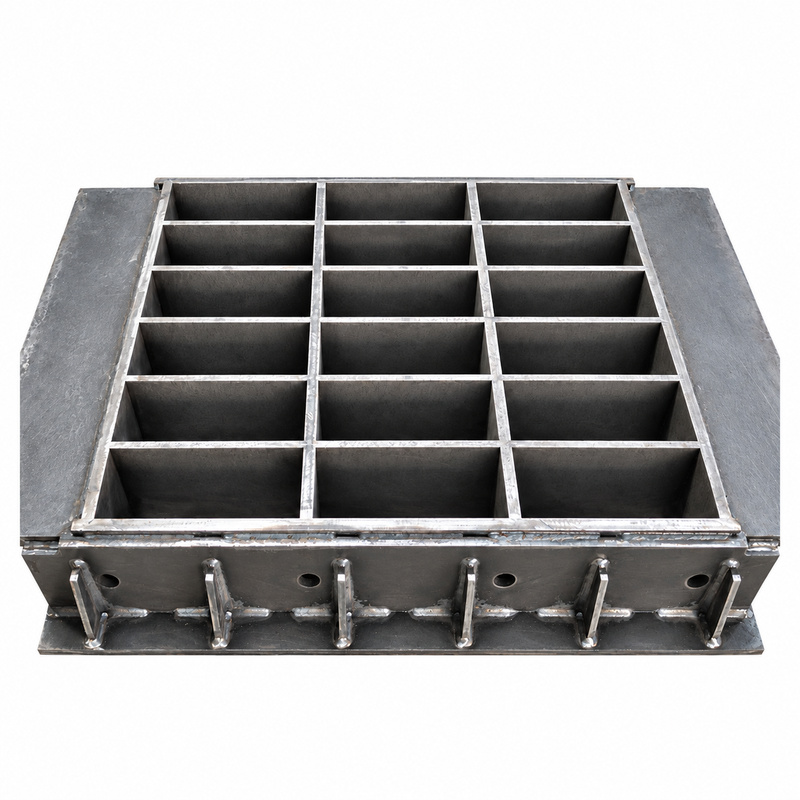
Assume an invented planning exercise supplies a fresh mass of 12 kg for each defined unit and a pallet tare of 24 kg. Layout A has eight units; layout B has ten. These are teaching inputs, not actual HAWEN cavity counts, a product weight recommendation or evidence that either layout is feasible.
| Budget item | Layout A | Layout B |
|---|---|---|
| Defined fresh units | 8 | 10 |
| Mass per unit | 12 kg | 12 kg |
| Product payload | 8 × 12 = 96 kg | 10 × 12 = 120 kg |
| Pallet tare | 24 kg | 24 kg |
| Combined mass | 120 kg | 144 kg |
Adding two units changes the product payload by 24 kg in this example. The same amount is added to the combined mass because the pallet is unchanged. Both totals are useful, but they answer different reference questions.
If a proposed range contains different units on one defined pallet, sum the separately supplied fresh masses of those units instead of multiplying by one convenient average. Likewise, if the proposal changes the pallet, recalculate its tare contribution. Keep the compared configurations explicit so a change in product count does not conceal a simultaneous change of carrier.
A target unit mass is also a different input from a verified mass for the relevant fresh state. A budget built from a target can be useful in planning, provided that status remains visible. It does not establish what actual fresh units will weigh. When the technical decision requires actual values, carry that missing verification forward instead of presenting a target-based total as a measured pallet result.
For another fictional illustration, suppose a relevant document states a product-payload reference of 110 kg. A's 96 kg product total is below that stated figure; B's 120 kg product total is above it. Comparing A's combined 120 kg with the payload-only reference would mix boundaries.
Alternatively, if the applicable reference were a combined product-and-pallet mass of 130 kg, compare it with 120 and 144 kg respectively. These are alternative teaching references, not actual ratings for one machine. A receiving line needs its own approved, applicable limit and complete load definition.
A numerical comparison is unresolved if the document merely says “maximum load” without explaining what is included. Ask the equipment's responsible technical source to confirm whether the reference concerns product payload, pallet plus product, a different carrier assembly or another condition. A familiar machine brand cannot supply that missing definition.
The mold's own mass belongs to a different question unless it is expressly included in the actual equipment load case. A lifting reference for the tool must not be copied into a pallet-product budget, and a pallet load figure must not become a lifting assessment for the mold.
Even where the arithmetic falls below a correctly matched static reference, record only that numerical fact. It leaves the required assessment of load distribution, acceleration, product support and other operating conditions with the responsible equipment review. A budget cell should not be labelled “safe to run.”
HAWEN's solid-block product scope asks for unit weight targets and fresh-product handling information alongside machine and pallet details. The word “fresh” matters to the load state being examined.
A mass quoted for a differently conditioned sample is not automatically the supplied fresh mass for this budget. Its state and relevance need confirmation. Do not invent a conversion factor from a dry or cured sample, nor derive a convenient fresh value by applying an assumed density to the outside rectangle.
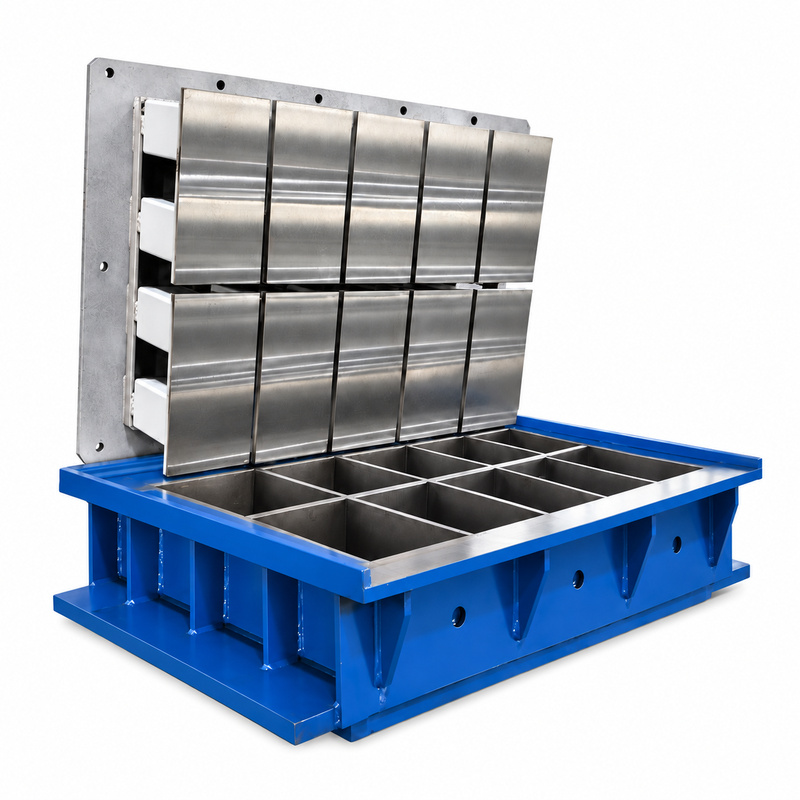
If the fresh-unit input is missing, the number of cavities can still be stated, but the resulting mass comparison cannot be completed. If the equipment reference is missing, the combined mass may be calculated while its relationship to the equipment remains unresolved. These are different gaps and lead to different technical questions.
The useful outcome names the proposed configuration, the supplied fresh masses, the included carrier and the matching equipment reference. It then states whether the arithmetic is above or below that reference, or which input prevents the comparison.
If a configuration exceeds the stated matching mass reference, return that specific issue for technical review rather than assuming a cavity can simply be removed. Product geometry, filling, upper tooling and the actual receiving machine still govern any revised proposal. The mass budget exposes a decision; it does not design its remedy.
A clear result keeps the geometry discussion moving while preserving its limits: the proposal fits a stated space, its defined product-and-pallet mass is this amount, and the equipment's actual load review remains the authority for the next step.

 Tel: +8618359454595
 Email: sale@hwmachines.com
 MP/WhatsApp: +8618359454595
 Manufacturer Address:Nanan, Quanzhou City, Fujian Province, China