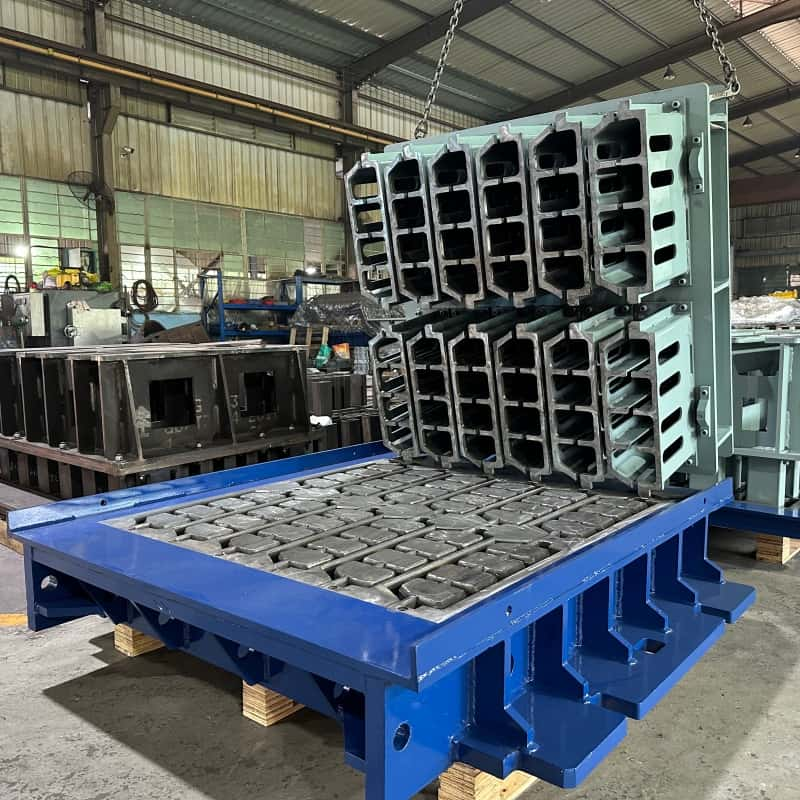
Concrete Block Molds
Hollow Block Mold
Solid Block Mold
Solid Brick Mold
Interlocking Block Mold
Thermal Block Mold

Author:HAWEN Block Mould Manufacturer TIME:2026-11-10
A minimum web thickness describes a local dimension. Normalized web area combines web-area information with the unit's nominal face area. Two hollow-block concepts can therefore have the same thinnest web and different normalized web areas. Supplying the thickness alone does not answer a request for the normalized quantity.
This distinction is useful when a block-development summary mixes a dimension, a total area and a ratio under one informal label. Name the requested metric before deciding that the existing measurement answers it. None of these quantities is a stand-alone strength result or a product-compliance verdict.
The CMHA discussion of masonry-unit dimensional testing describes web thickness and height contributing to total web area, which is then divided by nominal unit face area for normalization. That explanation identifies two geometrically different parts of the calculation: the web-area numerator and the face-area denominator.
For the simple illustration here, treat each web-area contribution as a defined rectangle viewed in a plane perpendicular to its span between the face shells. Its thickness and height form that rectangle. This is an ideal diagram assumption; it is not a new laboratory rule for measuring tapered, stepped or otherwise complex webs.
The nominal face area is N = L_nom × H_nom: the nominal length multiplied by the nominal height of the unit's elevation face. It is not the length-times-width plan face or the top-view concrete area surrounding the holes. Label the elevation face and the web section in separate views. Keeping both labelled avoids turning the formula into an unexplained division between two similarly named areas.
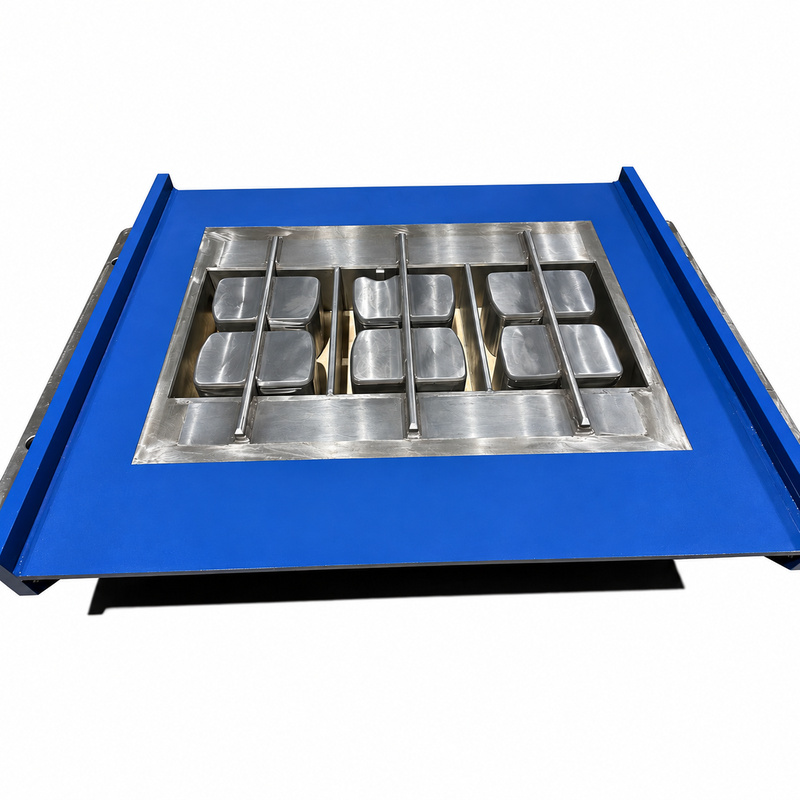
Consider two fictional teaching units with the same nominal face area, labelled N. In both, every ideal rectangular web contribution is 20 mm thick and 100 mm high. These numbers only make the example easy to follow; they are not recommended web dimensions or a HAWEN block specification.
Each rectangle contributes 20 × 100 = 2,000 mm². Two contribute a total of 4,000 mm². The minimum thickness in this ideal set is 20 mm, and the normalized expression is 4,000 mm² divided by N.
The same individual rectangle contributes 2,000 mm². Three contribute 6,000 mm². The minimum thickness remains 20 mm, while the normalized expression becomes 6,000 mm² divided by the same N.
Because N is unchanged, Q's expression is one and a half times P's. Reading only the 20 mm minimum would conceal the different numerator. Neither result establishes that the unit is better, suitable or compliant. It demonstrates that the local thickness does not uniquely determine the normalized metric.
Web height matters in the numerator too. If an ideal contribution keeps its thickness but has a different defined height, its rectangle has a different area. Counting webs without their area information is therefore another incomplete shortcut. For a real unit, use the applicable technical determination rather than treating every visible web as identical.
The geometry also has to identify which sections are the webs being assessed. Face shells and webs have different roles in the unit description; a rectangle selected from another concrete section cannot quietly become a web-area contribution. At ends or complex intersections, the actual method may require interpretation beyond the simple identical rectangles shown here. Have the responsible technical reviewer identify the relevant sections before making a numerator from them.
The teaching comparison holds those definitions fixed. Its different result comes from one additional defined contribution, rather than from changing the viewing plane, counting one section twice or giving a shell a new label.
The denominator must remain explicit when comparing concepts. If the total web area stays fixed while the nominal unit face area doubles, the normalized expression halves. That is a change in the area ratio, even though no local minimum thickness has changed.
Similarly, silently replacing a specified nominal face area with an actual face area changes the calculation. If those areas differ, the resulting numeric expression will differ. The responsible designer or laboratory should establish the applicable reference, rather than let a purchasing summary choose whichever area is readily available.
Show numerator and denominator units before reducing the expression. A report may express the ratio using a named area-per-area convention rather than a bare decimal. A number copied without that convention can become misleading even if the underlying division was correct.

There are several distinct questions. A local thickness result can address the named thickness feature under its agreed method. Total web area needs the relevant contributions. Normalized web area additionally needs the specified nominal face reference. The presence of one result does not establish that the others have been determined.
This web-area ratio is also different from a whole-block geometric volume or the net and gross loaded areas used in a strength report. Those quantities describe other geometric objects and have their own purposes. Sharing the word “area” is not enough to make their denominators interchangeable.
HAWEN's face-shell and web geometry scope provides the product context for that distinction. When reviewing the proposed unit, identify whether the unresolved request concerns a specific thickness or the different normalized quantity. That gives the technical reviewer a precise question without substituting a generic statement that the webs have been checked.
The older CMHA note is used here to explain the quantities, not to supply a current threshold or laboratory procedure. Actual requirements, methods and acceptance belong to the applicable project and current technical references. The immediate decision is simply whether the evidence presented answers the metric requested.
Technical background: CMHA: Sampling and Testing Concrete Masonry Units, dimensional-measurement discussion. No numerical requirement or compliance rule from an older standard edition is adopted.

 Tel: +8618359454595
 Email: sale@hwmachines.com
 MP/WhatsApp: +8618359454595
 Manufacturer Address:Nanan, Quanzhou City, Fujian Province, China