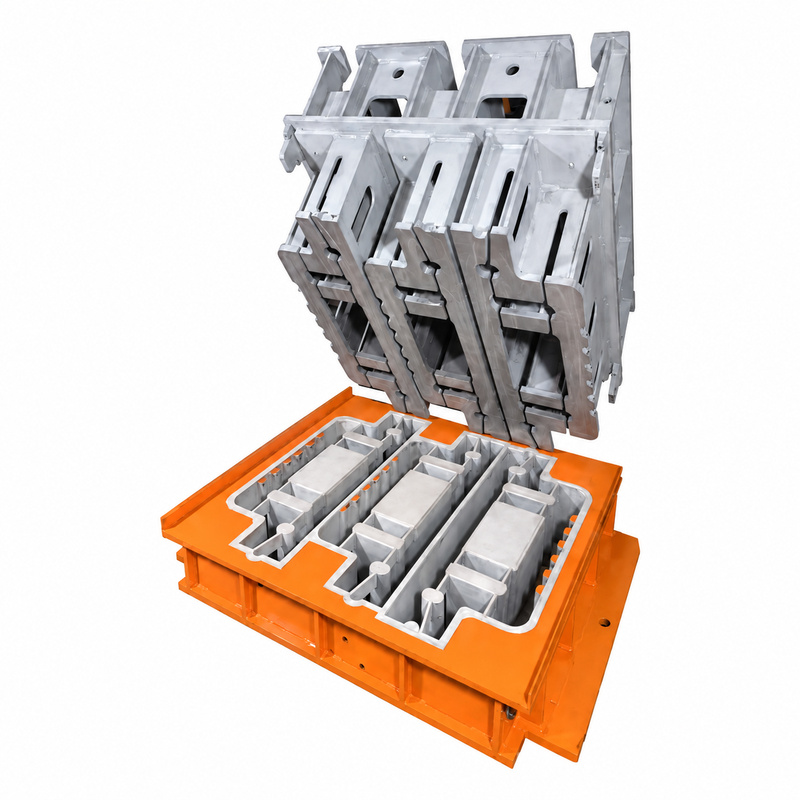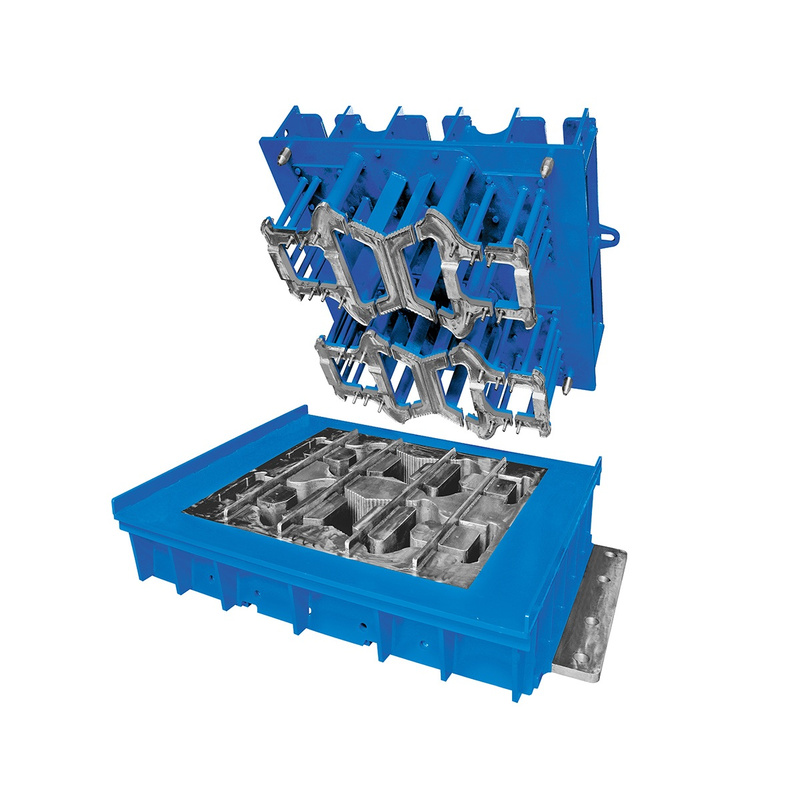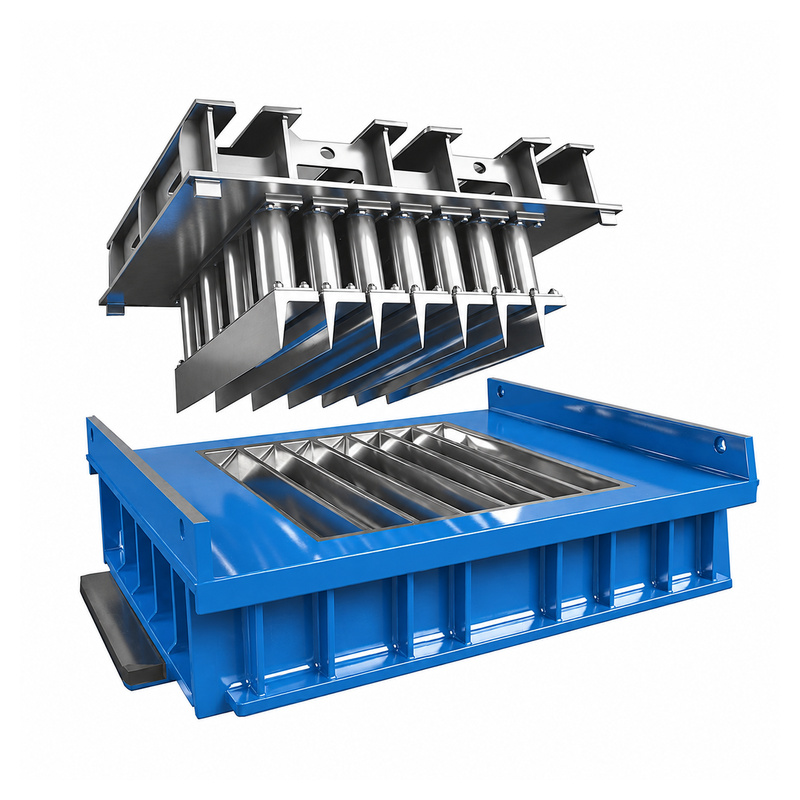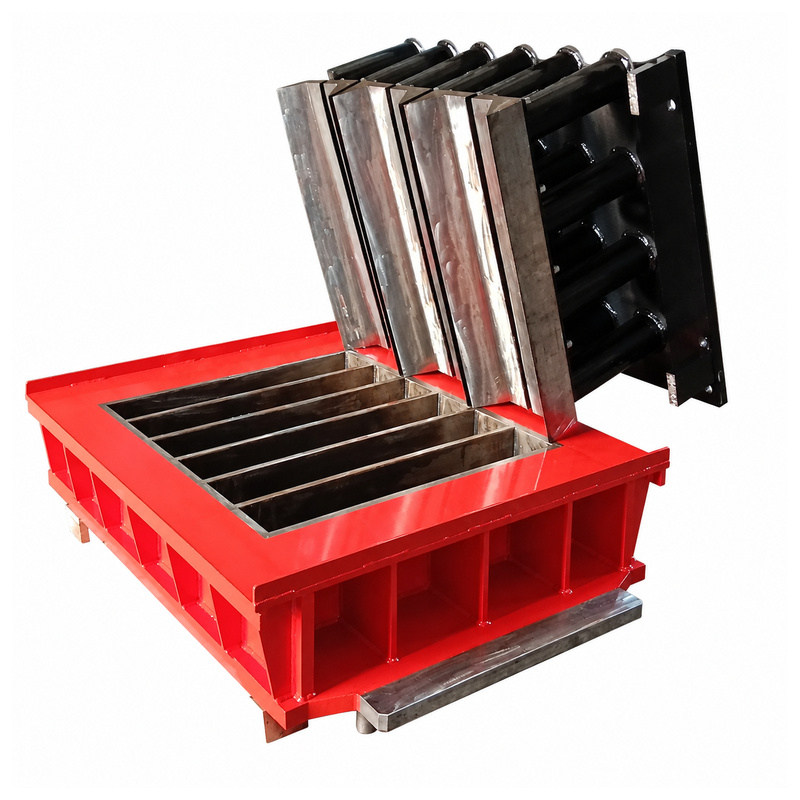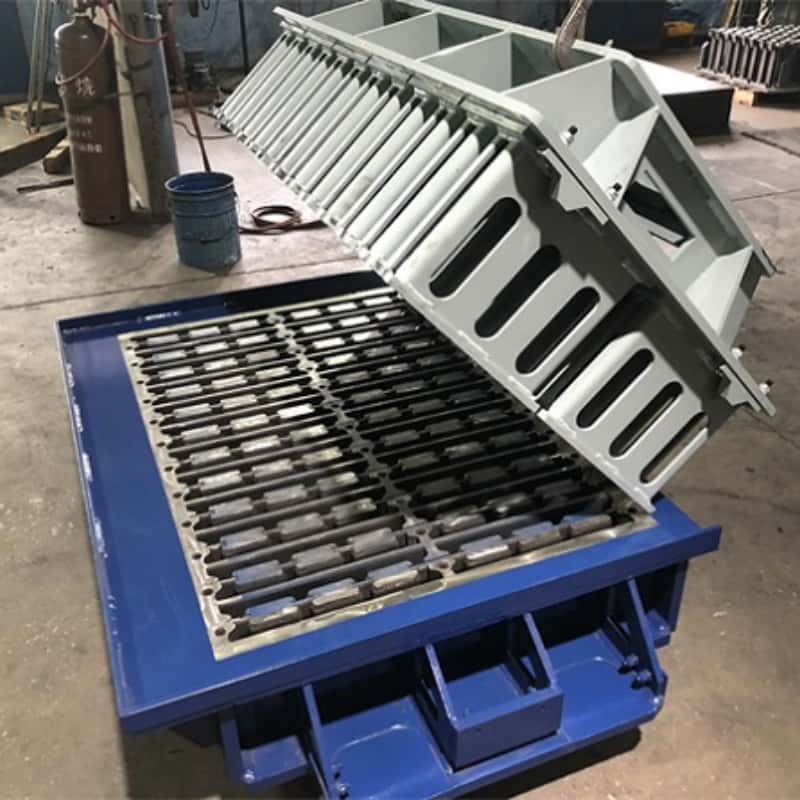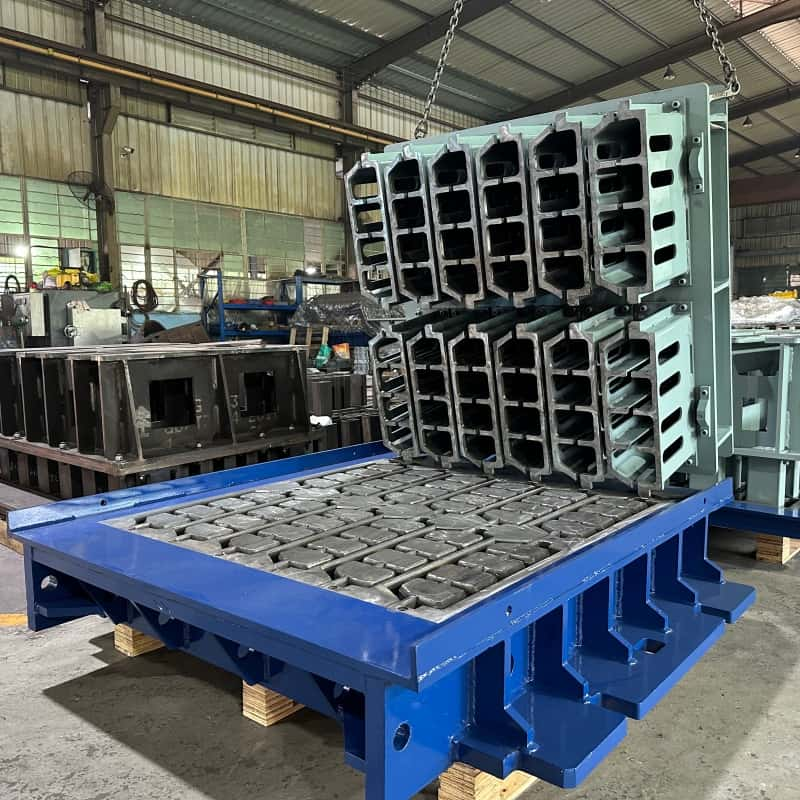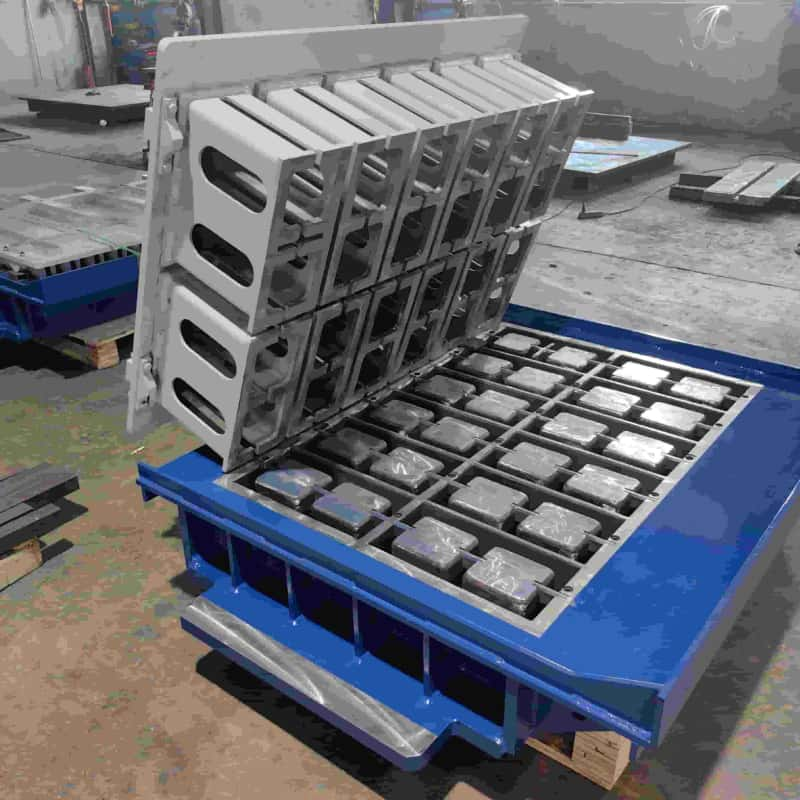
Concrete Block Molds
Hollow Block Mold
Solid Block Mold
Solid Brick Mold
Interlocking Block Mold
Thermal Block Mold
Author:HAWEN Block Mould Manufacturer TIME:2026-11-06
An outside width and all the smaller widths inside it can describe the same distance twice. If their nominal values disagree, agreeing tighter tolerances will not repair the drawing. Before a concrete block mold enters tolerance review, check whether the dimensions along one complete section actually close—and identify which values depend on the others.
A closed dimension chain is a geometric relationship, rather than a document-version problem. One drawing can contain the conflict. The useful first question is whether its labelled segments describe the same physical endpoints as its overall dimension.
Consider a simplified hollow-block section. A straight line across its width passes through a left face shell, an opening, an internal web, a second opening and a right face shell. If these are consecutive, nonoverlapping segments from one outside face to the other, their sum equals the total width along that line.
That condition matters. A dimension taken at another height, a sloping face, a stepped end or an opening that does not cross the chosen line can invalidate a simple addition. Do not collect convenient dimensions from different views and call the result a closed chain.
Also distinguish a segment width from a locating dimension. An opening width and a centre-to-centre pitch are not consecutive lengths to add together. Trace the start and end of every arrow: if one stops at a centreline while the next begins at an opening edge, the selected values have not yet defined the claimed chain. An apparent mismatch may come from that reading error rather than from conflicting design values.
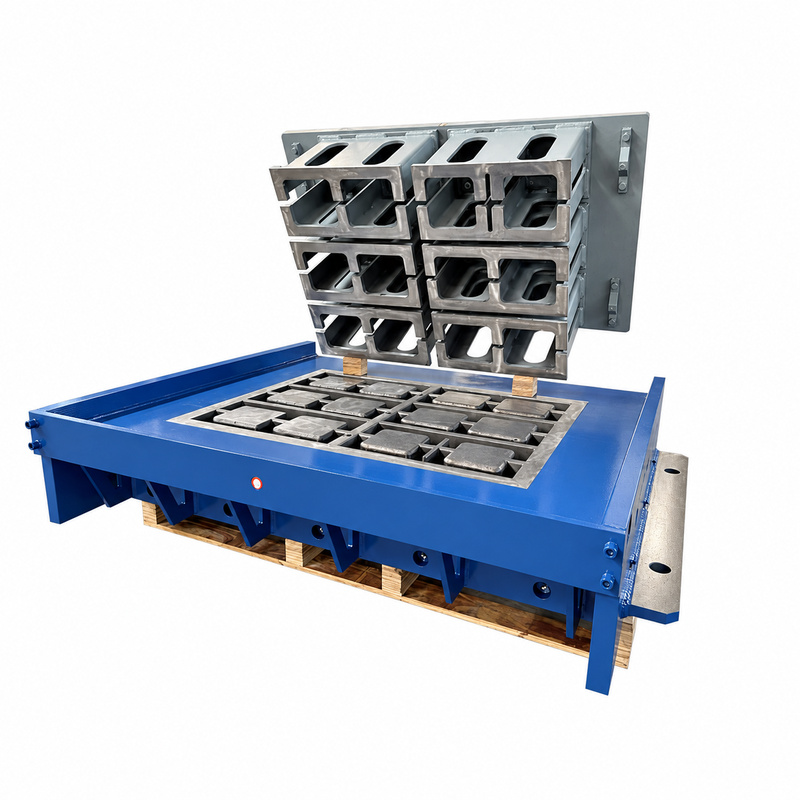
HAWEN's face-shell and web geometry information treats the outer profile, openings and concrete sections as connected requirements. The chain check examines one consequence of that connection. It does not establish what those dimensions should be.
In this invented example, every value is in millimetres and refers to the same straight section line. The figures are teaching values, not a proposed masonry profile, HAWEN specification or recommendation for shell and web thickness.
The segment sum is 20 + 60 + 20 + 60 + 20 = 180 mm. Suppose the same drawing labels the overall distance between those outside faces as 190 mm. The nominal chain falls short by 10 mm.
The useful result is not “the mold needs an extra ten millimetres.” It is that these nominal requirements cannot all describe the stated line simultaneously. The mismatch could involve a wrong value, a different reference face, an omitted feature or a misunderstood section. The arithmetic locates the contradiction; it does not select its correction.
A precise clarification: “The five consecutive segments total 180 mm, while the same endpoints are labelled 190 mm. Please confirm the intended geometry and the dimensional references before tolerance requirements are agreed.”
Leave that question with the responsible designer. Dividing the difference between the two shells, changing the openings or replacing the overall value would each make a different design decision. A buyer should not choose one merely because it makes the sum convenient.
Now imagine that the designer confirms an overall width of 180 mm with those five nominal segment values. The nominal chain closes. However, the overall width is still determined by the segments; it has not become an additional independent geometric freedom.
This distinction becomes important when acceptance requirements are proposed. Marking every dimension as independently controlling without considering their relationship can create a different conflict, even though the printed nominal sum is correct. Which features control the design, which values are derived, and how conformity is assessed need a coordinated decision.
The purchasing team can point out the dependency without assigning tolerances. It should not infer that every listed value must have the same tolerance, or that a total-width tolerance can simply be copied onto every shell and opening. No universal allocation follows from the nominal arithmetic.
These outcomes prevent a quick drawing check from being mistaken for a completed tolerance analysis. They also avoid a misleading pass label: nominal closure does not establish manufacturability, inspection capability, machine fit or conformity of an actual component.
HAWEN's dimensional and cavity-check guidance calls for agreed features, methods and acceptance references. Bring a resolved chain into that discussion, with the common section line and endpoints identified. The mold maker can then review the intended product geometry with a clear distinction between arithmetic consistency and the engineering decisions still to be made.
A useful handoff is the marked chain and its unresolved relationship. A longer dimension list is unnecessary when the actual issue is that several labels claim to control the same distance.

 Tel: +8618359454595
 Email: sale@hwmachines.com
 MP/WhatsApp: +8618359454595
 Manufacturer Address:Nanan, Quanzhou City, Fujian Province, China