
Concrete Block Molds
Hollow Block Mold
Solid Block Mold
Solid Brick Mold
Interlocking Block Mold
Thermal Block Mold
Author:HAWEN Block Mould Manufacturer TIME:2026-10-12
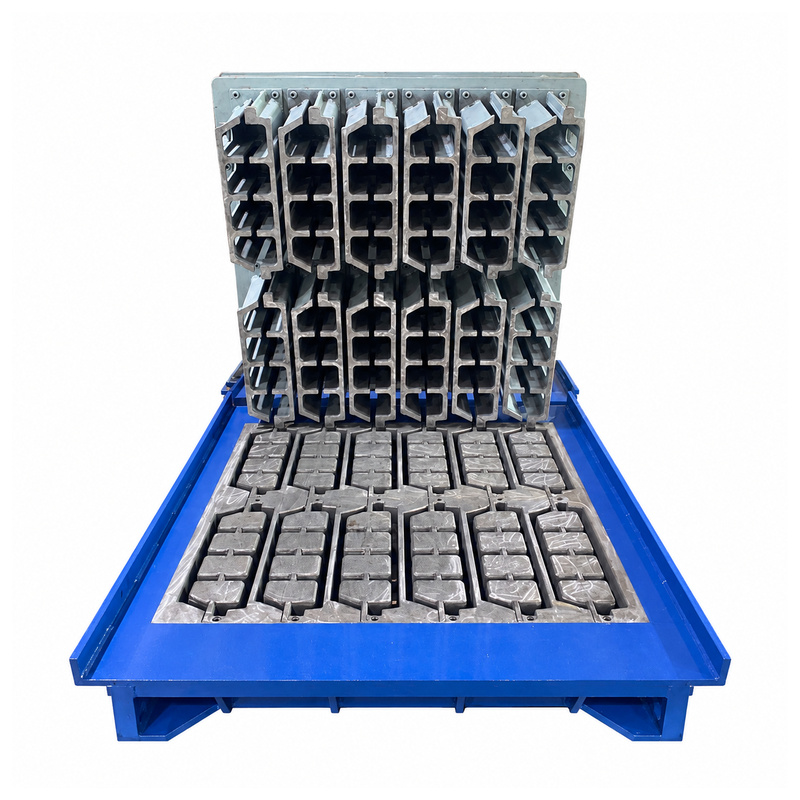
Block dimensions, core shapes, and hole arrangements are customized to your drawings or samples. Wall thickness and release geometry are reviewed together to match your product requirements and production equipment.
Swedish HARDOX steel is used for the hollow block mold beams to provide wear resistance in these components. A frame reinforced by welded stiffeners helps maintain structural stability and component alignment during repeated production.
Critical wear components undergo carbonitriding and quenching, achieving a surface hardness of HRC 59–61 with an effective hardened layer of approximately 1.5 mm. This treatment helps resist abrasive wear and preserve the forming geometry.
Hollow block molds are manufactured with a specified clearance of 0.3–0.4 mm per side between the mold box and tamper head. Controlled matching supports component movement while maintaining the intended forming clearances.
Mounting dimensions, working area, and mold interfaces are checked against your machine specifications before manufacturing. This provides customized tooling for replacement requirements or additional block formats on your existing equipment.
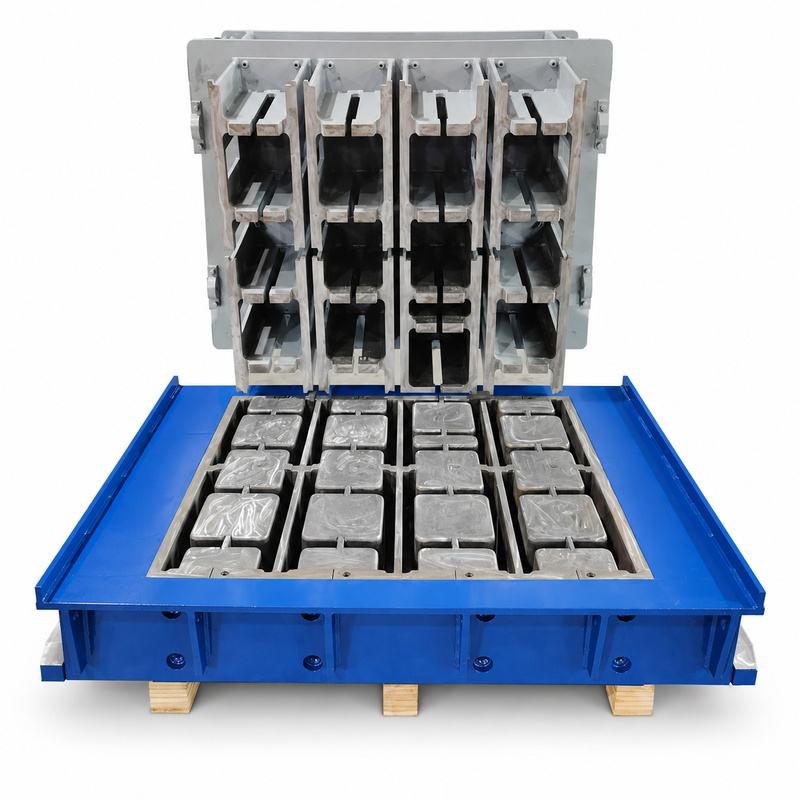
Corresponding interlocking features are manufactured according to your approved block design. Accurate profile reproduction helps neighboring units fit consistently during assembly.
Connecting profiles, cavities, and overall dimensions can be developed from drawings or physical samples. This allows the mold to reflect the specific geometry of your block system.
Suitable materials and heat treatment are selected for critical forming components. Protecting these surfaces against wear helps maintain the geometry on which block alignment depends.
Release surfaces and complex connecting features are evaluated during mold development. This helps identify shapes that may require design adjustments or a different mold arrangement before production.
Your machine specifications and existing mold dimensions are reviewed alongside the block design. The resulting mold combines the required interlocking geometry with the installation requirements of your equipment.
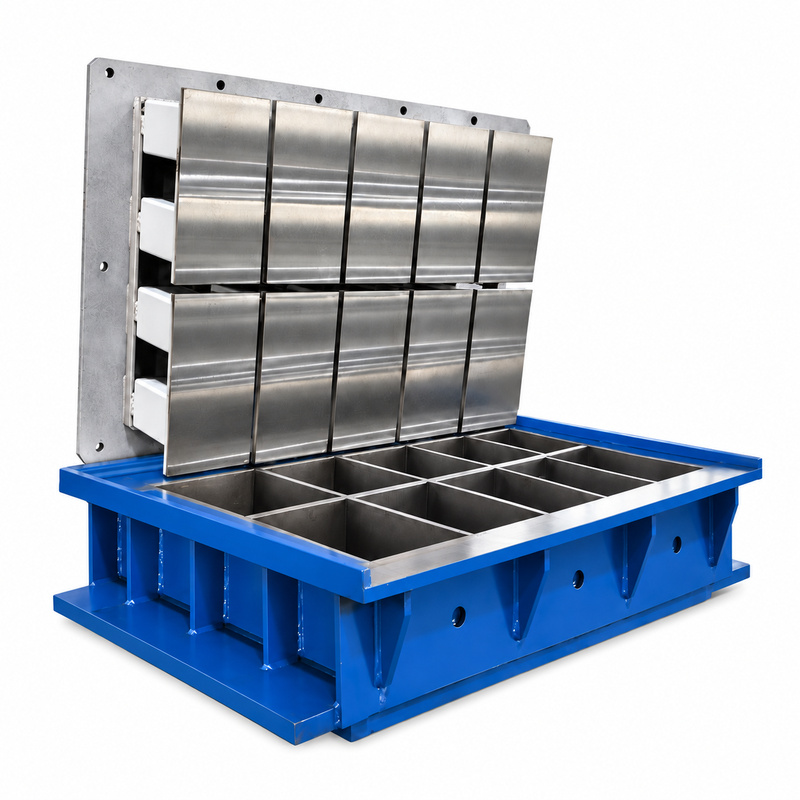
Solid block molds are developed around your required length, width, height, and shape. This provides tooling for market-specific block formats on compatible production equipment.
The number and arrangement of cavities are determined from the block dimensions and usable machine area. Each layout is evaluated against the actual production configuration.
Accurate machining defines the cavity surfaces and matching tamper components. Controlled component dimensions support consistent block shape during properly adjusted production.
Critical wear components receive carbonitriding and quenching, with specified surface hardness of HRC 59–61 and an effective hardened layer of approximately 1.5 mm. The treatment helps preserve working surfaces exposed to abrasive concrete mixes.
Original drawings, mold measurements, and product specifications can be used to develop replacement tooling. Machine interfaces are confirmed before manufacturing to support installation on the existing line.
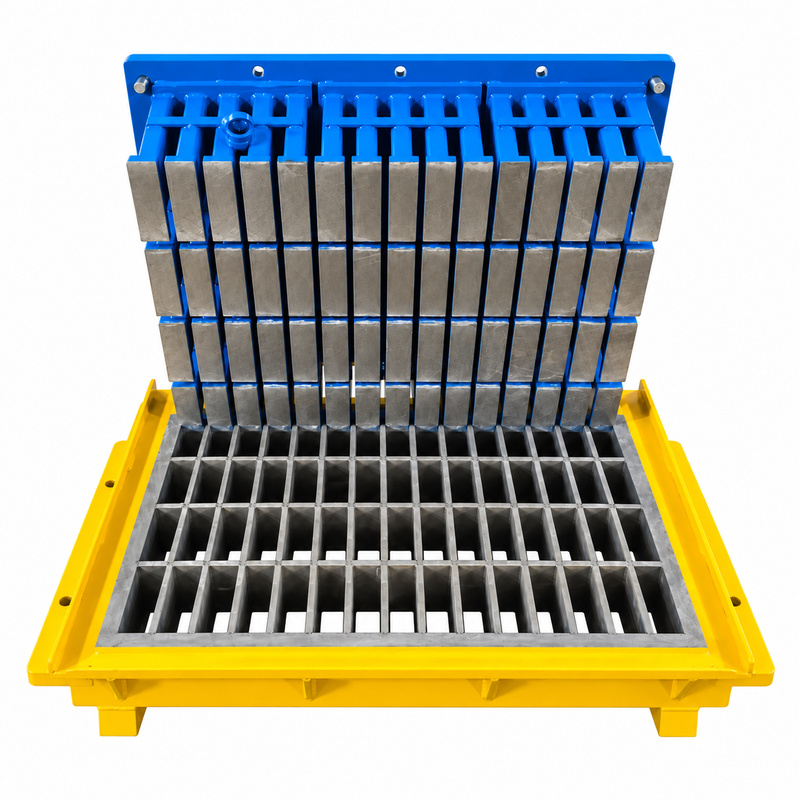
Cavity arrangements are developed around the brick dimensions and available machine working area. The layout establishes how many bricks can be formed in each cycle.
Length, width, height, chamfers, and suitable edge profiles can be incorporated into the design. This allows the mold to reproduce the brick format required by your market.
Precision machining and matching of mold and tamper components support dimensional consistency between cavities. This helps maintain a uniform product format across the production pallet.
Suitable materials and heat treatment protect the surfaces that repeatedly contact the concrete mix. Wear control helps retain the intended brick dimensions and edge definition.
Existing brick drawings or physical samples can provide the basis for mold development. Combined with machine and installation information, they support accurate technical confirmation before manufacturing.
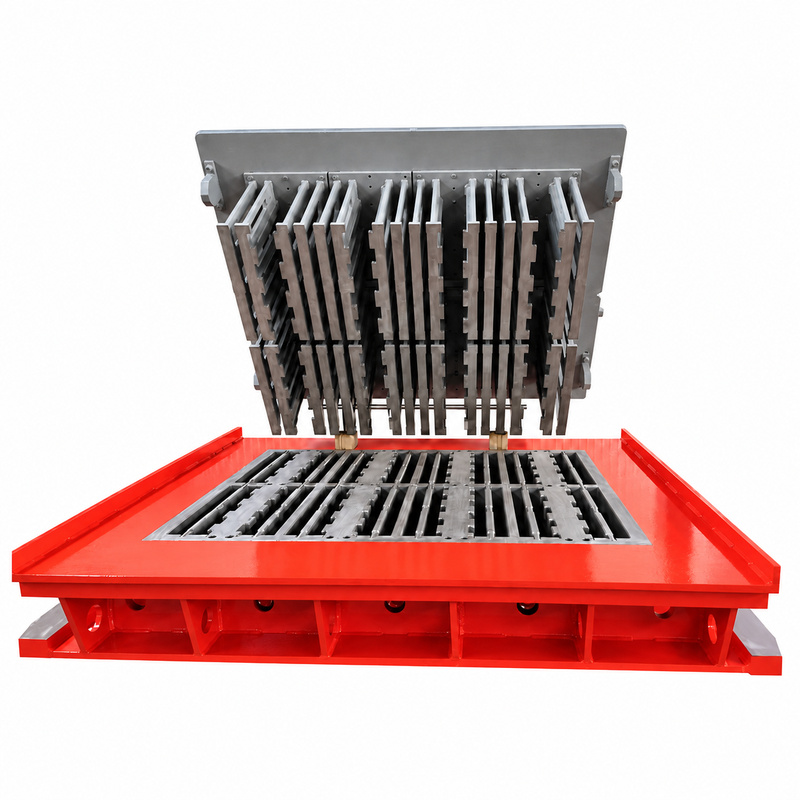
Multiple cavities and internal profiles are developed according to your approved block drawings. The mold reproduces the specified geometry for your thermal block product.
Wall sections and closely spaced cores are evaluated together with filling, compaction, and demolding requirements. This helps identify difficult features before the mold structure is finalized.
Machining methods are selected to suit the internal geometry and forming details. Accurate core positioning supports consistent reproduction of the specified cavities and concrete sections.
Materials and treatment processes are selected according to component function and geometry. Protecting critical surfaces helps preserve the detailed profiles during repeated production.
The block design is reviewed alongside machine working area, interfaces, and configuration. For special or newly developed designs, real-machine trials are normally arranged to evaluate forming and demolding.
Send the finished block drawing and machine interface details for a mould review. Explore Concrete Block Molds or contact HAWEN to discuss the required tooling.

 Tel: +8618359454595
 Email: sale@hwmachines.com
 MP/WhatsApp: +8618359454595
 Manufacturer Address:Nanan, Quanzhou City, Fujian Province, China