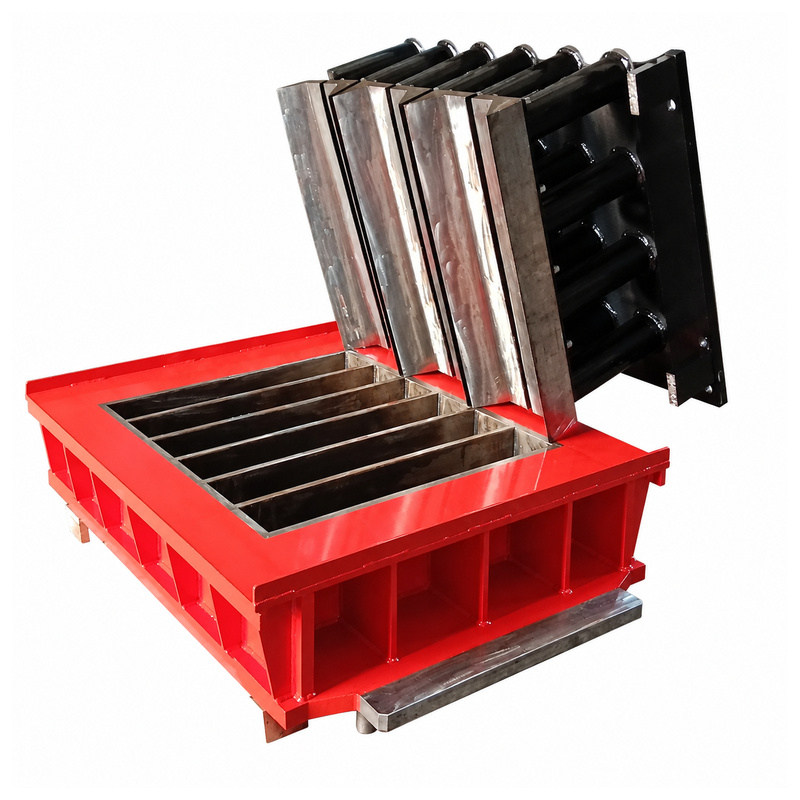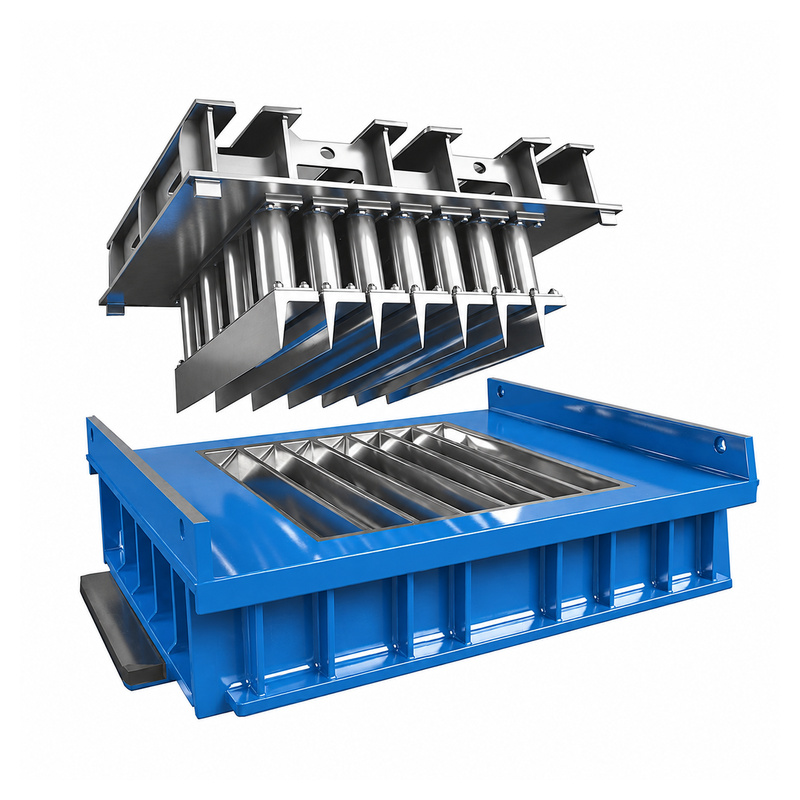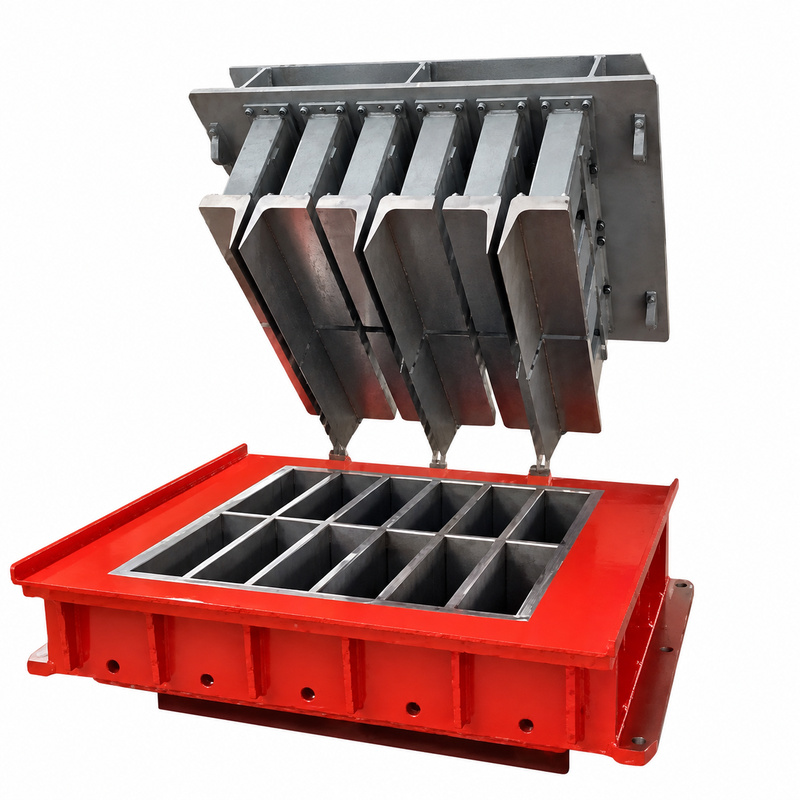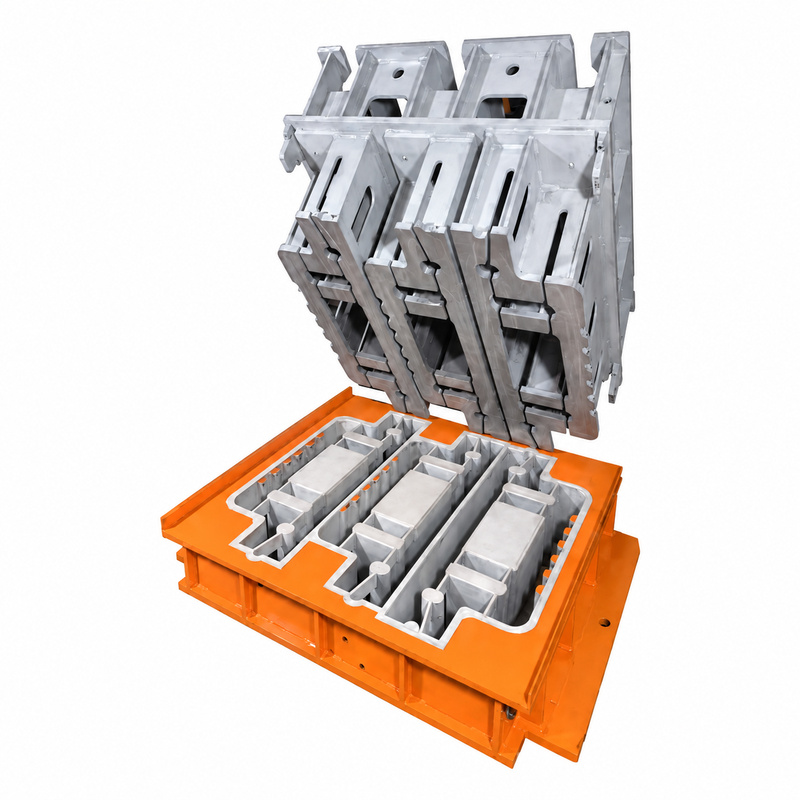
Concrete Block Molds
Hollow Block Mold
Solid Block Mold
Solid Brick Mold
Interlocking Block Mold
Thermal Block Mold
Author:HAWEN Block Mould Manufacturer TIME:2026-11-14
A pallet average can sit exactly on target while some brick positions are below it and others are above it. Opposing differences cancel in the mean. Before accepting an average as evidence of height consistency, look at the positional values it summarises. The question is what the summary preserves, rather than whether its headline number looks reassuring.
Imagine five selected positions across an illustrative row: left edge, left inner, centre, right inner and right edge. They are a simplified teaching arrangement, not a recommended sampling plan or the layout of a real mold. Each value below is a fictional height deviation in millimetres from one common target, measured on the same defined basis.
Zero means equal to that target. A negative value means lower and a positive value means higher. The example supplies no actual brick height or permitted deviation; a value's acceptability would require the real product criteria.
The sum is zero. Divide by five and the mean is zero. The highest minus the lowest value is also zero for these selected readings.
The sum is −1 − 1 + 0 + 1 + 1 = zero. Its mean is again zero, while the range is +1 minus −1 = 2 mm.
An average-only summary makes these examples look identical. The positional displays show what the mean has discarded: in B the readings vary across the selected row, even though their average deviation vanishes.
This does not mean that A passes or B fails. The examples have no agreed tolerance, method uncertainty or representative sampling basis. They demonstrate that equal means cannot, by themselves, establish equal consistency.
Nor do A's matching readings establish that every position in a real pallet is identical. They describe only the selected readings in this teaching set. An unmeasured row or cavity remains outside that observation. This is a limit of the available evidence, even when its mean and range both happen to be zero.
Adding the range retains information about the distance between the highest and lowest selected readings. It still does not show where those readings occurred. If the same five B values were rearranged among positions, the mean and range would stay unchanged while the spatial pattern would change.
For instance, placing the two positive deviations at the left and the two negative deviations at the right reverses B's displayed pattern without changing either headline statistic. A technical reviewer comparing observations across the pallet needs those locations to remain visible. A sorted list from lowest to highest would conceal that relationship.
HAWEN's solid-brick tooling information specifically calls for comparing centre and edge trial bricks, including height differences. The useful extension is to choose a summary that retains the comparison instead of averaging it away after measurement.
Use values from the agreed feature and reference. Mixing a height reading from one face with a different reference at another position creates a comparability problem before any mean is calculated. Likewise, a relative-deviation plot needs the same target basis across its displayed values.
Keep the reported measurement resolution understandable when preparing the display. Rounding individual readings before summarising can discard differences that were present in the original data. Conversely, adding decimal places to a calculated mean does not make the measurements more precise. The agreed method and recorded resolution should govern how the actual results are presented; this arithmetic example does not select either.
A repeated position-related difference may give the technical team a more specific question to investigate. It does not identify the cause on its own. HAWEN's troubleshooting guidance considers tooling, material distribution, pallet support and setup among the relevant review areas for height differences.
It would therefore be premature to label B's left side a worn cavity, an incorrectly set pressing component or a feeding fault just from the fictional shape of the display. The same caution applies to a real plot: preserve the observation and let the appropriate investigation examine its context.
If observations from another run become available, keep the runs distinguishable before comparing the patterns. Pooling them into one mean can hide a change between the runs, just as pooling positions hides differences within a row. This article does not define how many runs or samples are enough; that belongs to the actual inspection plan.
For a question about selected positional consistency, a useful presentation includes the values in their physical order, the common height reference and clearly labelled summary quantities. The mean can remain part of that presentation. It becomes misleading when it stands alone as if it also described spread and position.
For a different question, such as a formal lot-acceptance decision, these simple calculations may be insufficient. A five-position demonstration is not a validated sampling scheme, and a range is not a process-capability measure. Use the agreed method and acceptance criteria for that actual task.
The immediate review decision can be modest and precise: the average is arithmetically correct, but the positional values must be considered before the intended consistency conclusion is reached. That preserves the useful work already done while keeping a zero average from erasing the differences the inspection was meant to examine.

 Tel: +8618359454595
 Email: sale@hwmachines.com
 MP/WhatsApp: +8618359454595
 Manufacturer Address:Nanan, Quanzhou City, Fujian Province, China