
Concrete Block Molds
Hollow Block Mold
Solid Block Mold
Solid Brick Mold
Interlocking Block Mold
Thermal Block Mold

Author:HAWEN Block Mould Manufacturer TIME:2026-10-16
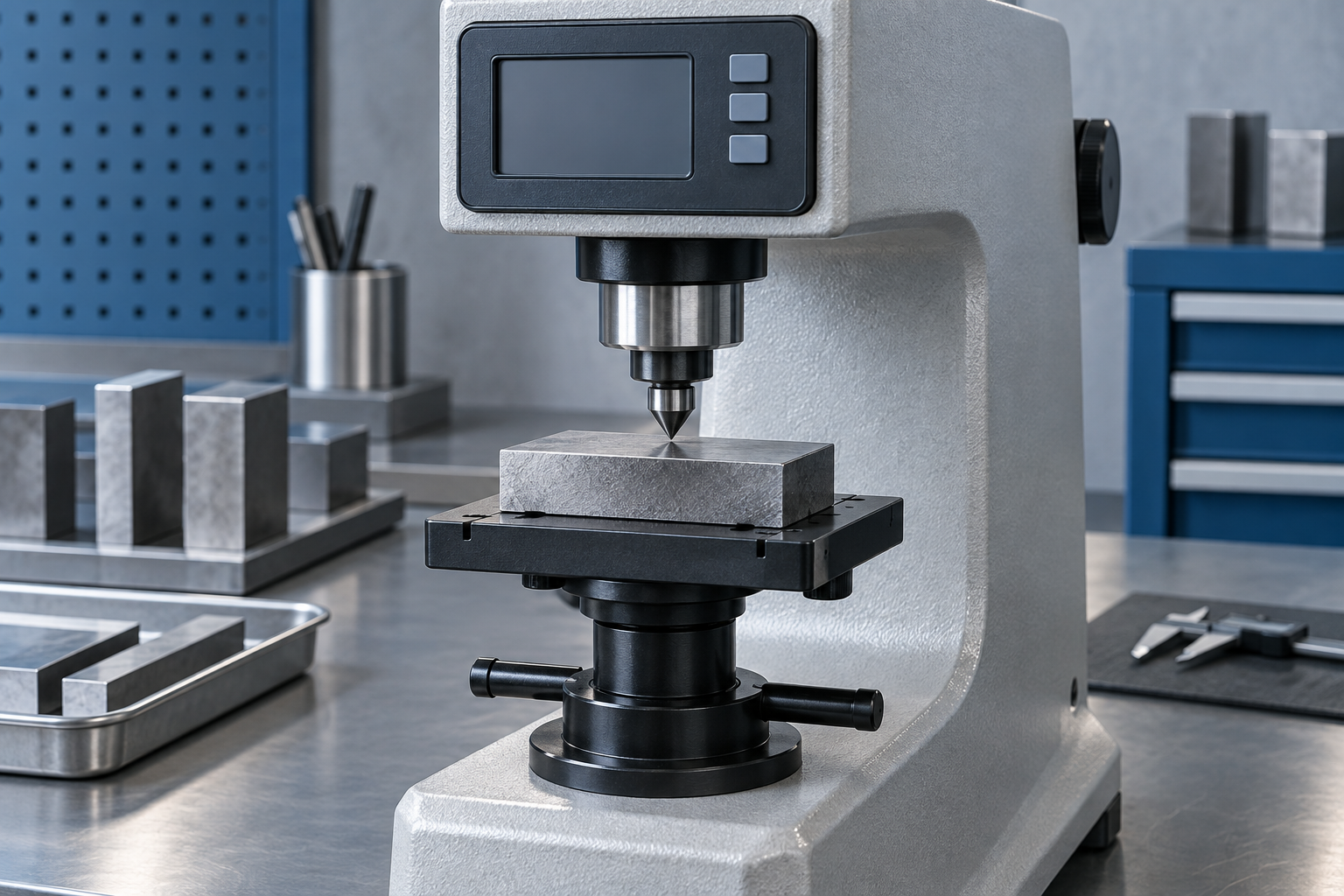
Block mould hardness verification needs a defined material condition and inspection plan. A hardness number is meaningful when its test method, measurement location and acceptance requirement are known. Start with the component specification, then confirm whether the supplied steel or finished part requires additional treatment or inspection.
Processing instructions depend on the selected steel. For example, the SSAB Hardox 450 datasheet states that this grade is not intended for further heat treatment. That restriction belongs to the named material; it is a reason to check the actual supplier guidance, rather than apply one heating procedure to every mould component.
TWI's hardness-testing guidance explains how surface preparation, test load, specimen thickness, measurement position and equipment condition affect readings. Choose a method suited to the inspected area and material specification. Keep the stated hardness scale with every result so that the values are interpreted correctly.
Check hardness evidence alongside the required dimensional and surface inspections. Resolve unusual results before accepting the affected component. The inspection record should show what was tested and against which requirement, rather than using an isolated hardness figure as proof of the complete mould's performance.

 Tel: +8618359454595
 Email: sale@hwmachines.com
 MP/WhatsApp: +8618359454595
 Manufacturer Address:Nanan, Quanzhou City, Fujian Province, China