
Concrete Block Molds
Hollow Block Mold
Solid Block Mold
Solid Brick Mold
Interlocking Block Mold
Thermal Block Mold
Author:HAWEN Block Mould Manufacturer TIME:2026-11-04
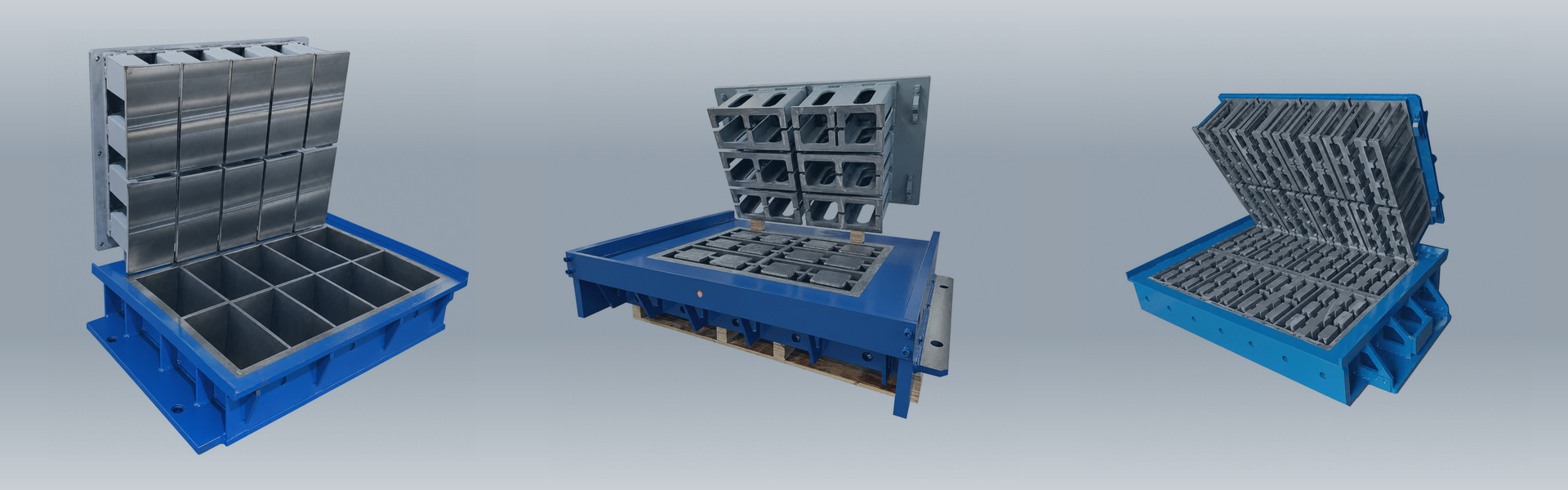
The main difference is the internal forming structure. A hollow block mould uses core components to form cavities inside the concrete unit, while a solid block mould produces a unit without those large internal voids. This changes the geometry that the mould and matching pressing elements need to reproduce.
For a hollow block, the drawing needs to define the openings, webs and face sections as well as the outside dimensions. For a solid block, the outside shape and any recesses, locating features or edge details still need to be shown. The description “solid” does not by itself define every surface of the product.
These differences affect how the mould is designed around filling, pressing and demoulding. The proposed layout must be considered with the concrete product geometry and the receiving machine. A mould for a solid unit should not be selected solely because its outside frame looks similar to an existing hollow block mould.
Provide a sectioned product drawing, required block dimensions, machine model, pallet dimensions and the relevant existing tooling information. State whether the new mould replaces a current product or adds another product to the line. The technical review can then address the required forming surfaces and machine interfaces together, rather than assuming that changing the internal mould components is sufficient.
See Solid Block Mold for the relevant mould range and drawing requirements.

 Tel: +8618359454595
 Email: sale@hwmachines.com
 MP/WhatsApp: +8618359454595
 Manufacturer Address:Nanan, Quanzhou City, Fujian Province, China